 NoBug
NoBug· TDD · 35 min read
TDD 实现 Spring DI 容器 (六) - Qualifier 支持
本文在基础的按类型注入之上,集成了 Qualifier (限定符) 和默认 Named 注解支持,通过重构组件标识体系使其能够精准匹配同类型下的各种不同实现。
目录 (Table of Contents)
目录 (Table of Contents)
Qualifier
自定义 Qualifier 的依赖
注册组件时,可额外指定 Qualifier
注册组件时,可从类对象上提取 Qualifier
寻找依赖时,需同时满足类型与自定义 Qualifier 标注
支持默认 Qualifier——Named
将上面的功能点,细分为多个测试任务
归属于 ContextTest 上下文中的任务,分别有关于 TypeBinding 和 DependencyCheck 的任务:
TypeBinding 的任务:
1   @Nested
2   public class WithQualifier {
3       // TODO binding component with qualifier
4       // TODO binding component with qualifiers
5       // TODO throw illegal component if illegal qualifier
6   }
DependencyCheck 的任务:
1   @Nested
2   public class WithQualifier {
3       // TODO dependency missing if qualifier not match
4       // TODO check cyclic dependencies with qualifier
5   }
归属于 InjectionTest 上下文中的任务,分别有关于 ConstructorInjection、FieldInjection、MethodInjection 的任务:
分别都有如下的测试任务:
1   @Nested
2   class WithQualifier {
3       // TODO inject with qualifier
4       // TODO throw illegal component if illegal qualifier given to injection point
5   }
binding component with qualifier
component 分为两种情况,分别是:instance 和 component。
绑定 instance
先实现 instance 的情况,创建测试:
1   // TODO binding component with qualifier
2   @Test
3   public void should_bind_instance_with_qualifier() {
4       Component component = new Component() {
5       };
6       config.bind(Component.class, component, new NamedLiteral("ChosenOne"));
7
8       Context context = config.getContext();
9
10      Component chosenOne =
11              context.get(Context.Ref.of(Component.class, new NamedLiteral("ChosenOne"))).get();
12      assertSame(component, chosenOne);
13  }
需要新建 NamedLiteral
1   record NamedLiteral(String value) implements jakarta.inject.Named {
2       @Override
3       public Class<? extends Annotation> annotationType() {
4           return jakarta.inject.Named.class;
5       }
6   }
并且需要在 ContextConfig 中增加包含三个参数的 bind 方法
1   public <Type> void bind(Class<Type> type, Type instance, Annotation qualifier) {
2   }
在 Ref 中增加两个参数的 of 方法:
1   static <ComponentType> Ref<ComponentType> of(Class<ComponentType> component, Annotation qualifier) {
2       return null;
3   }
使得编译通过。
实现
目前,保存 providers 的 map 中的 key 只有 class,我们现在需要的是 type 和 qualifier 两个参数共同组合成的 key
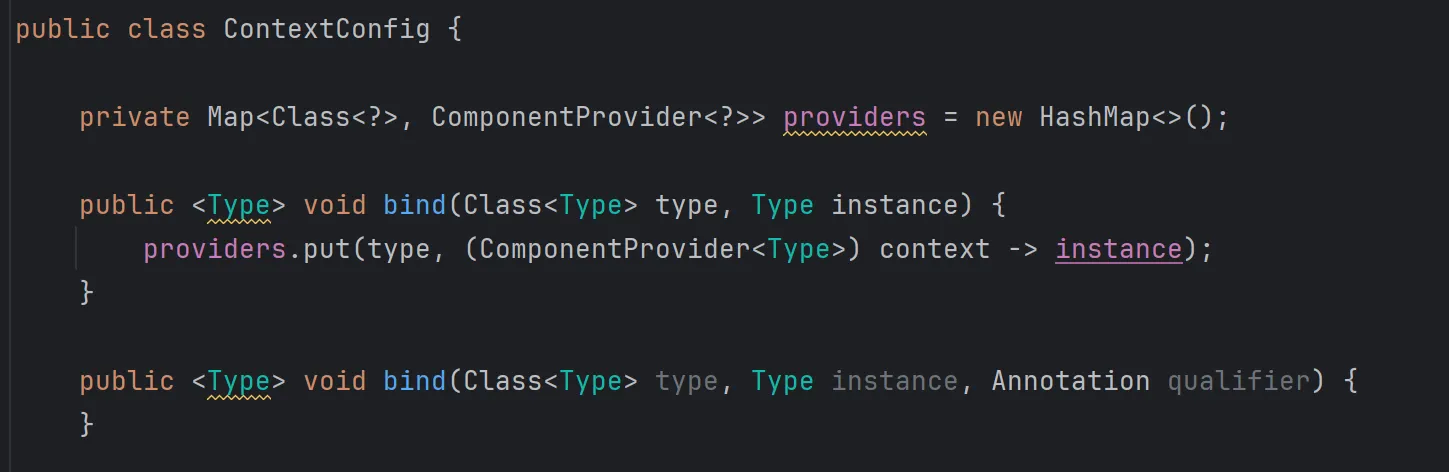
自定义一个 record 来封装 type 和 qualifier 的组合。
1   record Component(Class<?> type, Annotation qualifier) {
2   }
并新建一个 map 来保存
1 private Map<Component, ComponentProvider<?>> components = new HashMap<>();实现 bind 方法:
1   public <Type> void bind(Class<Type> type, Type instance, Annotation qualifier) {
2       components.put(new Component(type, qualifier), context -> instance);
3   }
get 时需要判断 Ref 中是否是 Qualifier 的情况
可以在在 Ref 中增加一个字段 qualifier ,并相应的在构造方法中增加字段:
1   private Annotation qualifier;
2
3   Ref(Type type, Annotation qualifier) {
4       init(type);
5       this.qualifier = qualifier;
6   }
7
8   public Annotation getQualifier() {
9       return qualifier;
10  }
新增分支,从 Context 中获取实例
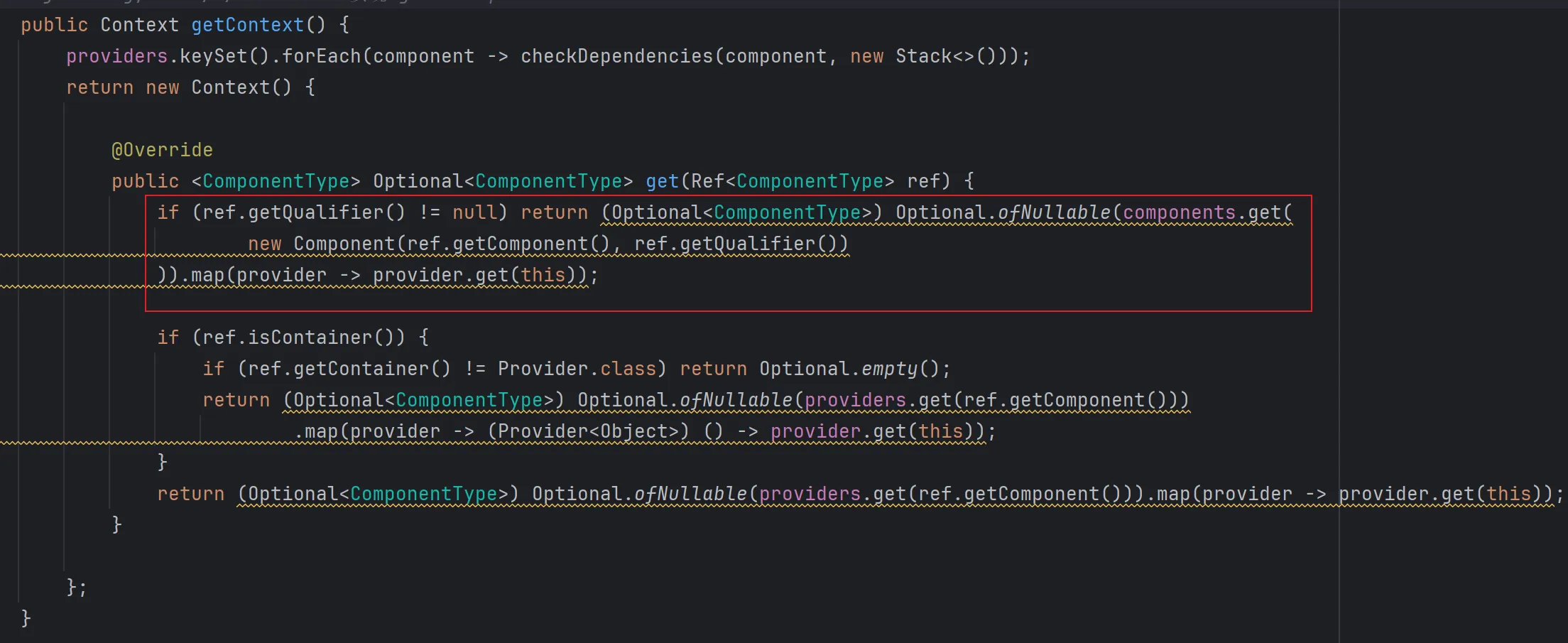
运行测试,通过。
绑定组件
构造测试
1   @Test
2   public void should_bind_component_with_qualifier() {
3       Dependency dependency = new Dependency() {
4       };
5       config.bind(Dependency.class, dependency);
6       config.bind(ConstructorInjection.class, ConstructorInjection.class, new NamedLiteral("ChosenOne"));
7
8       Context context = config.getContext();
9
10      ConstructorInjection chosenOne =
11              context.get(Context.Ref.of(ConstructorInjection.class, new NamedLiteral("ChosenOne"))).get();
12      assertSame(dependency, chosenOne.dependency());
13  }
1 static class ConstructorInjection implements Component {
2 private Dependency dependency;
3
4 @Inject
5 public ConstructorInjection(Dependency dependency) {
6 this.dependency = dependency;
7 }
8
9 @Override
10 public Dependency dependency() {
11 return dependency;
12 }
13 }需要增加一个对应的 bind 方法:
1   public <Type, Implementation extends Type>
2   void bind(Class<Type> type, Class<Implementation> implementation, Annotation qualifier) {
3       components.put(new Component(type, qualifier), new InjectionProvider(implementation));
4   }
运行测试,通过。
binding component with qualifiers
绑定、注册组件的时候,可以指定多个 qualifier,但是只能根据一个取,这是规范规定的。
绑定实例
1   // TODO binding component with qualifiers
2   @Test
3   public void should_bind_instance_with_multi_qualifiers() {
4       Component component = new Component() {
5       };
6       config.bind(Component.class, component, new NamedLiteral("ChosenOne"), new NamedLiteral("AnotherOne"));
7
8       Context context = config.getContext();
9
10      Component chosenOne = context.get(Context.Ref.of(Component.class, new NamedLiteral("ChosenOne"))).get();
11      Component anotherOne = context.get(Context.Ref.of(Component.class, new NamedLiteral("AnotherOne"))).get();
12
13      assertSame(component, anotherOne);
14      assertSame(chosenOne, anotherOne);
15  }
将 bind 方法的 qualifier 参数修改为可变数组,使编译通过:
1   public <Type> void bind(Class<Type> type, Type instance, Annotation... qualifiers) {
2       components.put(new Component(type, qualifiers[0]), context -> instance);
3   }
实现,bind 时分别注册每一 qualifier
1   public <Type> void bind(Class<Type> type, Type instance, Annotation... qualifiers) {
2       for (Annotation qualifier : qualifiers)
3           components.put(new Component(type, qualifier), context -> instance);
4   }
绑定组件
构造测试
1   @Test
2   public void should_bind_component_with_multi_qualifiers() {
3       Dependency dependency = new Dependency() {
4       };
5       config.bind(Dependency.class, dependency);
6       config.bind(ConstructorInjection.class, ConstructorInjection.class, new NamedLiteral("ChosenOne"),
7               new NamedLiteral("AnotherOne"));
8
9       Context context = config.getContext();
10
11      ConstructorInjection chosenOne =
12              context.get(Context.Ref.of(ConstructorInjection.class, new NamedLiteral("ChosenOne"))).get();
13       ConstructorInjection anotherOne =
14               context.get(Context.Ref.of(ConstructorInjection.class, new NamedLiteral("AnotherOne"))).get();
15
16      assertSame(dependency, chosenOne.dependency());
17      assertSame(dependency, anotherOne.dependency());
18  }
实现,对应的为 bind 方法的 qualifier 参数修改为可变数组,并分别注册每一个 qualifier :
1   public <Type, Implementation extends Type>
2   void bind(Class<Type> type, Class<Implementation> implementation, Annotation... qualifiers) {
3       for (Annotation qualifier : qualifiers)
4           components.put(new Component(type, qualifier), new InjectionProvider(implementation));
5   }
重构 ContextConfig 的内部实现
位置支持 Qualifier 我们目前已经有很多方法存在平行实现(实现方法非常类似),如果继续完成其他测试,那么会产生更多的平行实现。这里我们选择先重构。
components 替换掉 providers
接下来,就是要用 components 替换掉 providers
1   private Map<Class<?>, ComponentProvider<?>> providers = new HashMap<>();
2
3   private Map<Component, ComponentProvider<?>> components = new HashMap<>();
重构之前先看一下有哪些地方使用了 providers
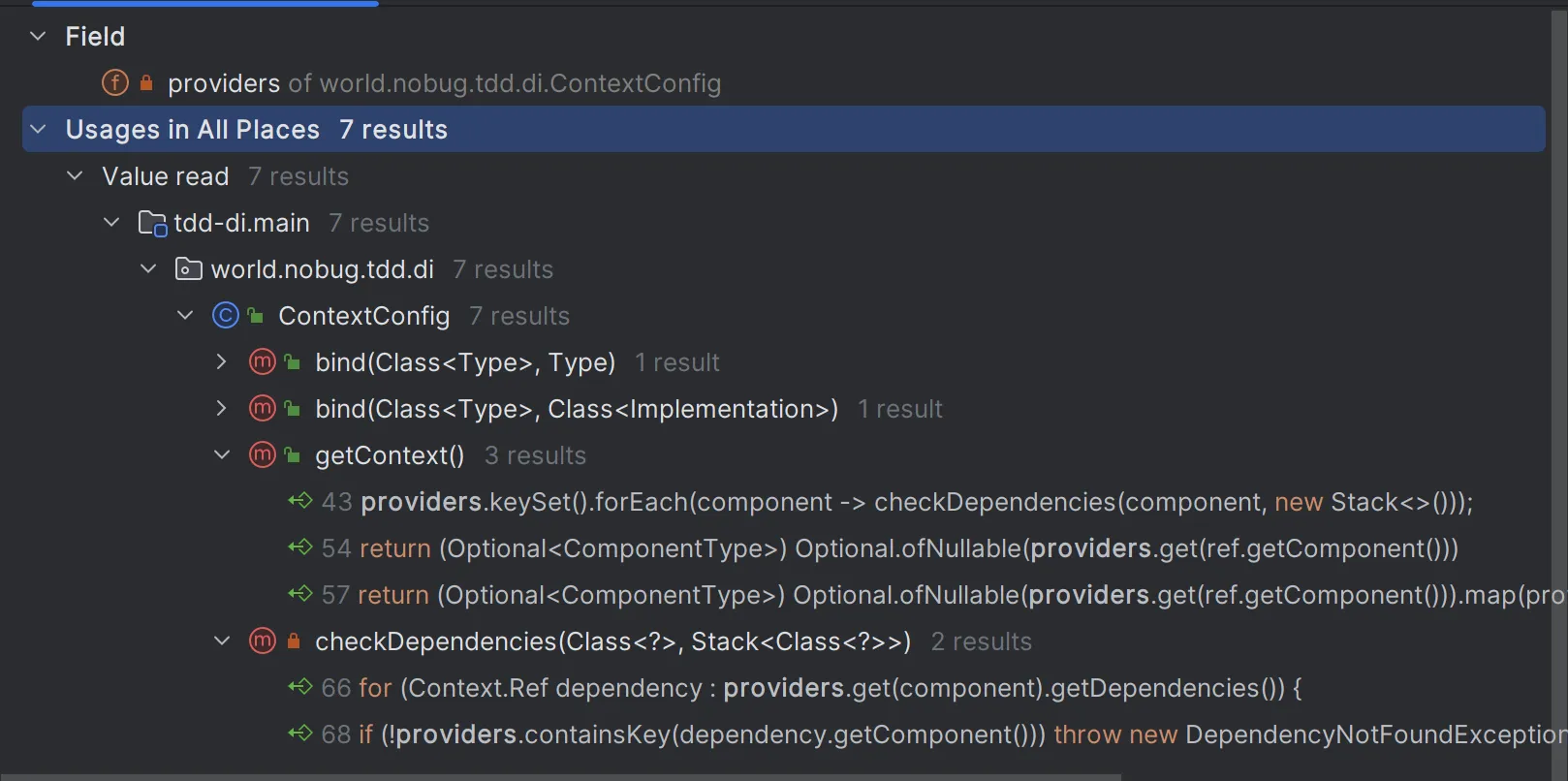
这里使用的主要地方是 getContext 和 checkDependencies。
先看 getContext
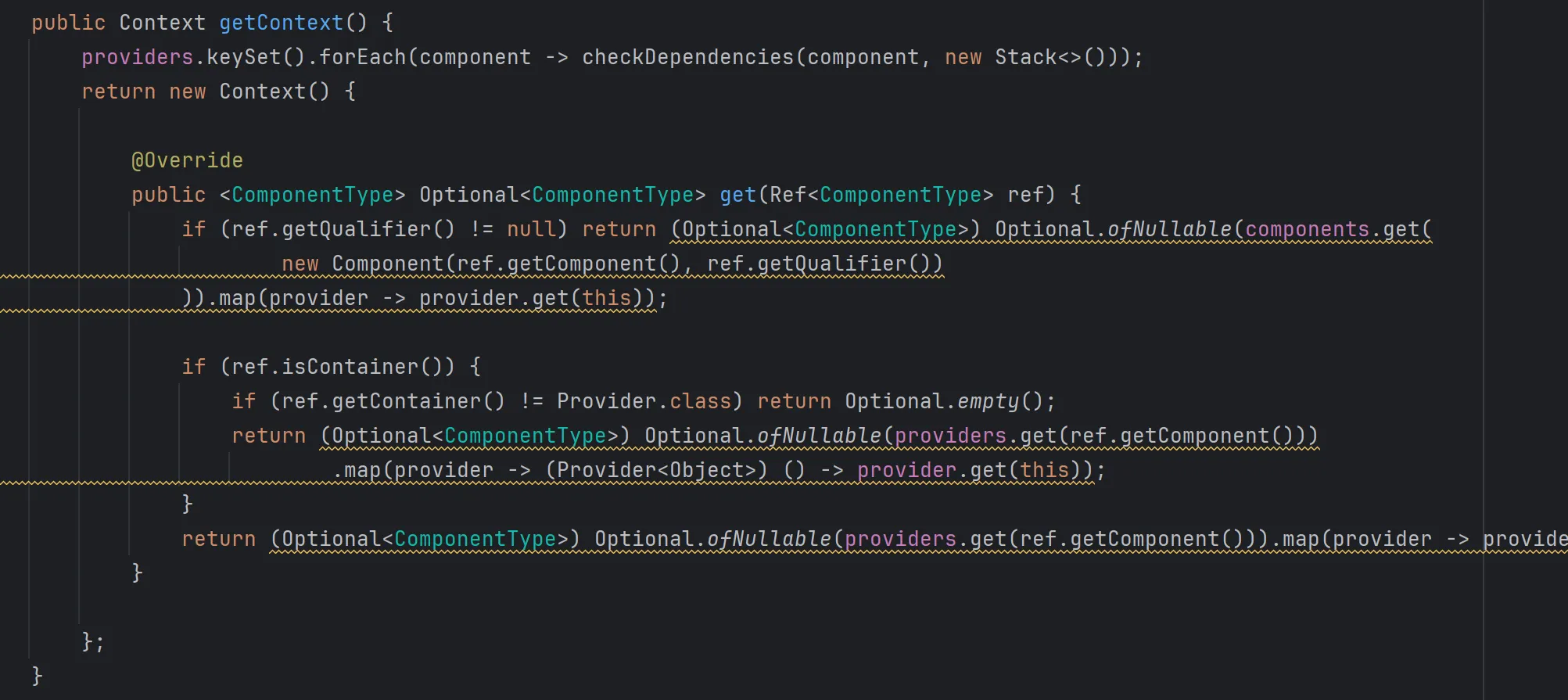
先将其中使用到 providers 的位置提取为方法:
1   private <ComponentType> ComponentProvider<?> getComponentProvider(Context.Ref<ComponentType> ref) {
2   //        components.get(new Component(ref.getComponent(), ref.getQualifier()));
3       return providers.get(ref.getComponent());
4   }
上面注释的代码,就是我们预期想要的实现。
逐步将使用到 providers 的地方用 components 替换掉。
bind 方法中替换:
1   public <Type> void bind(Class<Type> type, Type instance) {
2   //        providers.put(type, (ComponentProvider<Type>) context -> instance);
3       components.put(new Component(type, null), context -> instance);
4   }
5
6   public <Type, Implementation extends Type>
7   void bind(Class<Type> type, Class<Implementation> implementation) {
8   //        providers.put(type, new InjectionProvider(implementation));
9       components.put(new Component(type, null), new InjectionProvider(implementation));
10  }
getContext 方法替换:
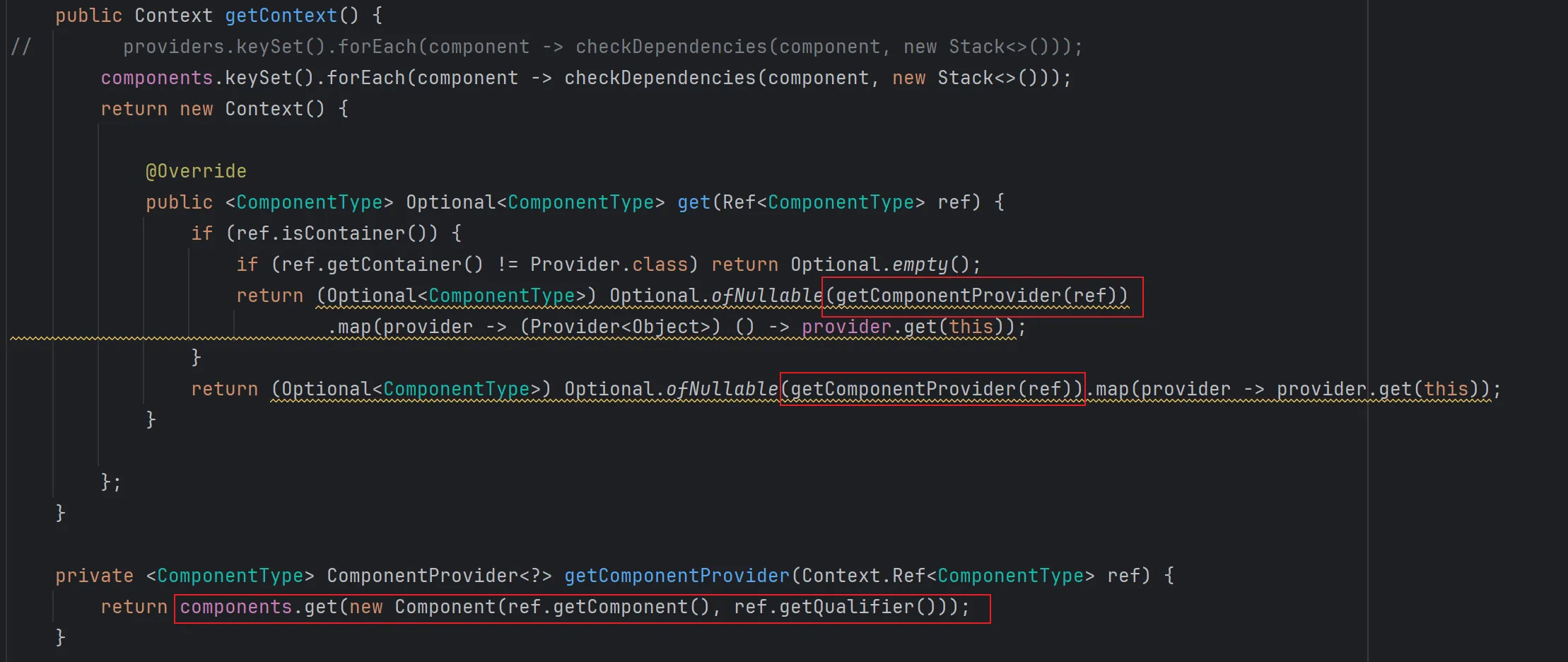
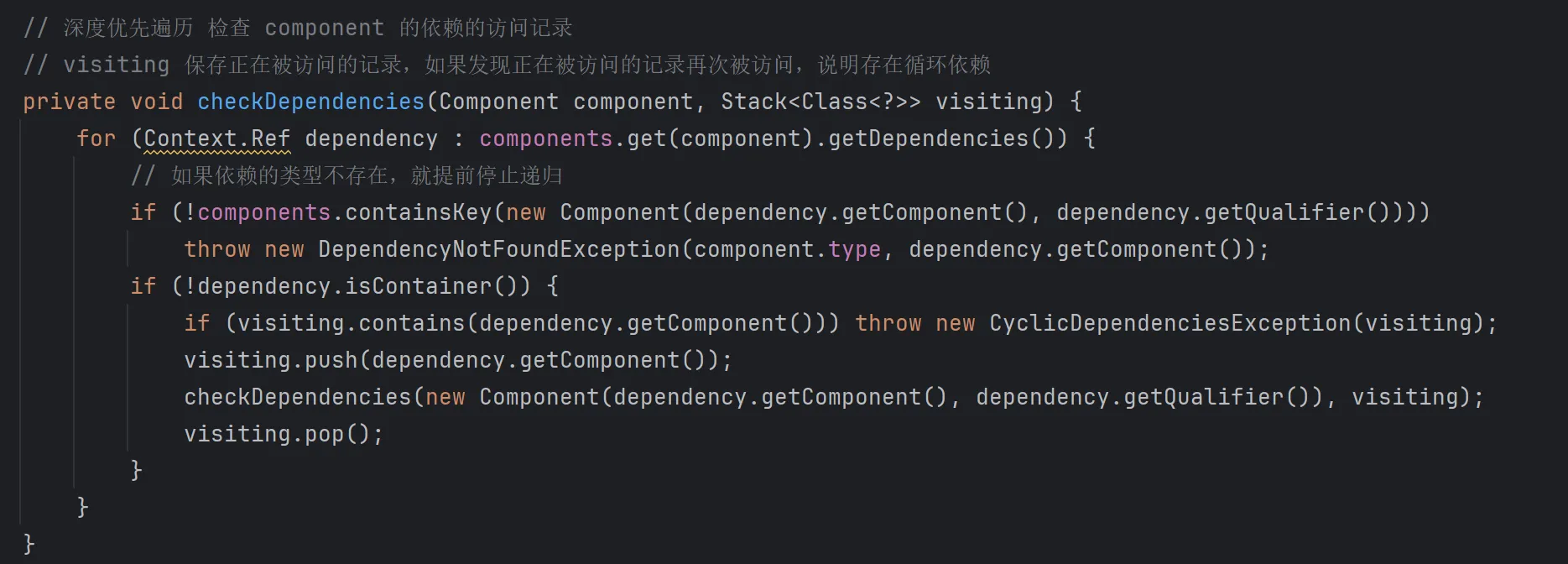
至此移除不在使用的 providers 即可。
观察以下两个 bind 方法,可以合并成一个
1   public <Type> void bind(Class<Type> type, Type instance) {
2       components.put(new Component(type, null), context -> instance);
3   }
4
5   public <Type> void bind(Class<Type> type, Type instance, Annotation... qualifiers) {
6       for (Annotation qualifier : qualifiers)
7           components.put(new Component(type, qualifier), context -> instance);
8   }
合并后为:
1 public <Type> void bind(Class<Type> type, Type instance, Annotation... qualifiers) { 2 if (qualifiers.length == 0) components.put(new Component(type, null), context -> instance); 3 for (Annotation qualifier : qualifiers) 4 components.put(new Component(type, qualifier), context -> instance); 5 }建议不合并,减少一个 if 也可以有一个更清晰的对外接口。
其他坏味道
可以观察到,很多使用 Ref 的地方都需要转换为 Component
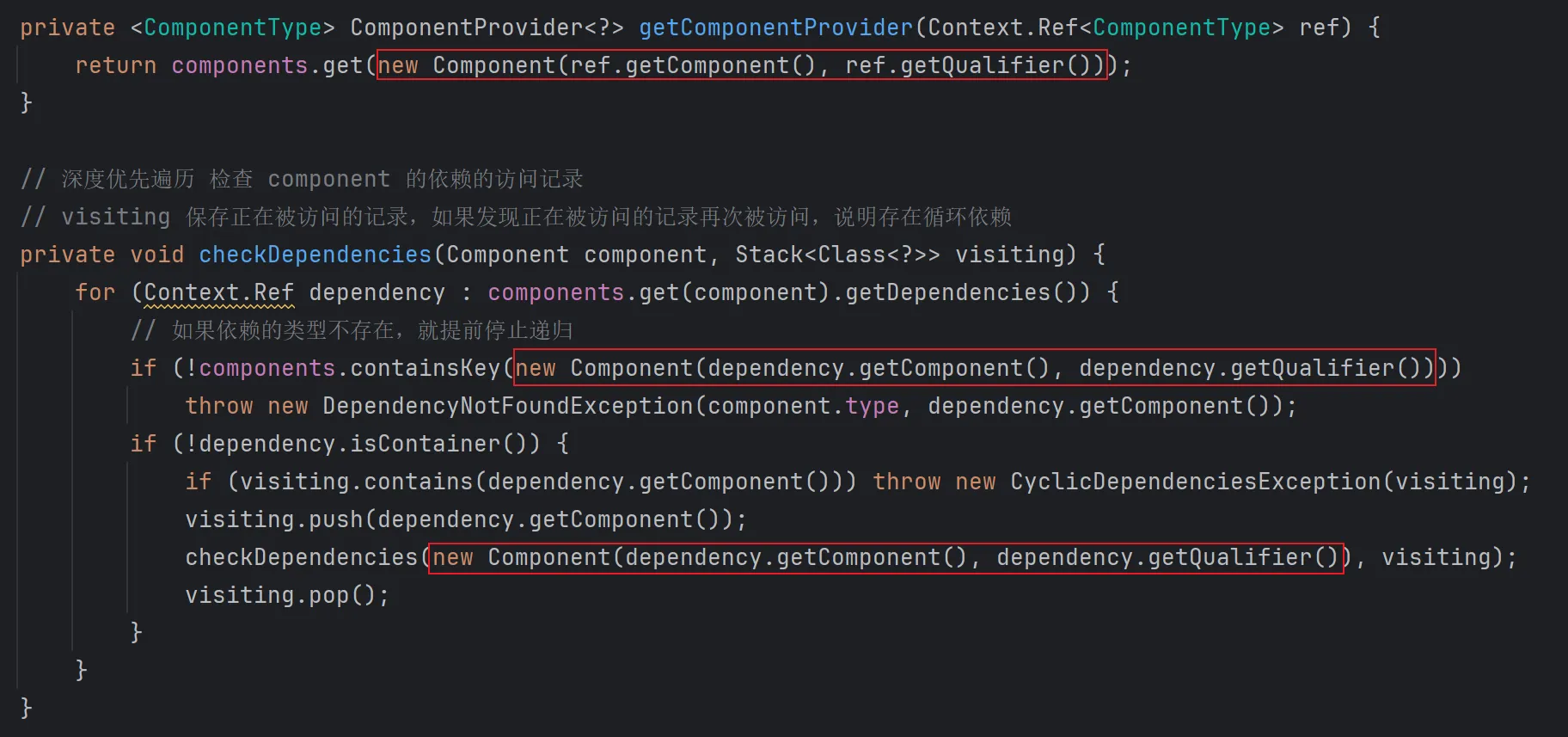
好像 Ref 和 Component 之间存在某种关系。
其实,Ref 就应该将 Class 和 Qualifier 封装为一个整体,而不是再将这两个拆散。
一个更合理的实现是,使用一个 Component 来替换掉 Class<?> component 和 Annotation qualifier 字段:
1   class Ref<ComponentType> {
2       private Type container;
3   //        private ContextConfig.Component component;
4       private Class<?> component;
5       private Annotation qualifier;
6   }
这里先将 Ref 重名为 ComponentRef,并从 Context 中移出,作为一个外部类。
也将 Component 从 ContextConfig 中移出,作为一个外部类。
由于原来已经有一个 Component 用于作为测试用例的类,这里先将原来的 Component 修改为 TestComponent,以避免因重名造成的异常。
在 ComponentRef 中增加 component 字段,并将原来的 component 字段重命名为 componentType:
1   public class ComponentRef<ComponentType> {
2       private Type container;
3       private Component component;
4       private Class<?> componentType;
5       private Annotation qualifier;
6   }
增加一个 component 字段,相应的给 init 中增加一个 qualifier 的参数,并在其中为 component 赋值。
1   private void init(Type type, Annotation qualifier) {
2       if (type instanceof ParameterizedType) {
3           this.container = ((ParameterizedType) type).getRawType();
4           this.componentType = (Class<?>) ((ParameterizedType) type).getActualTypeArguments()[0];
5           this.component = new Component(componentType, qualifier);
6       } else {
7           this.componentType = (Class<?>) type;
8           this.component = new Component(componentType, qualifier);
9       }
10  }
那么所有之前通过 ref 来 new Component 都可以替换为 ref.component().
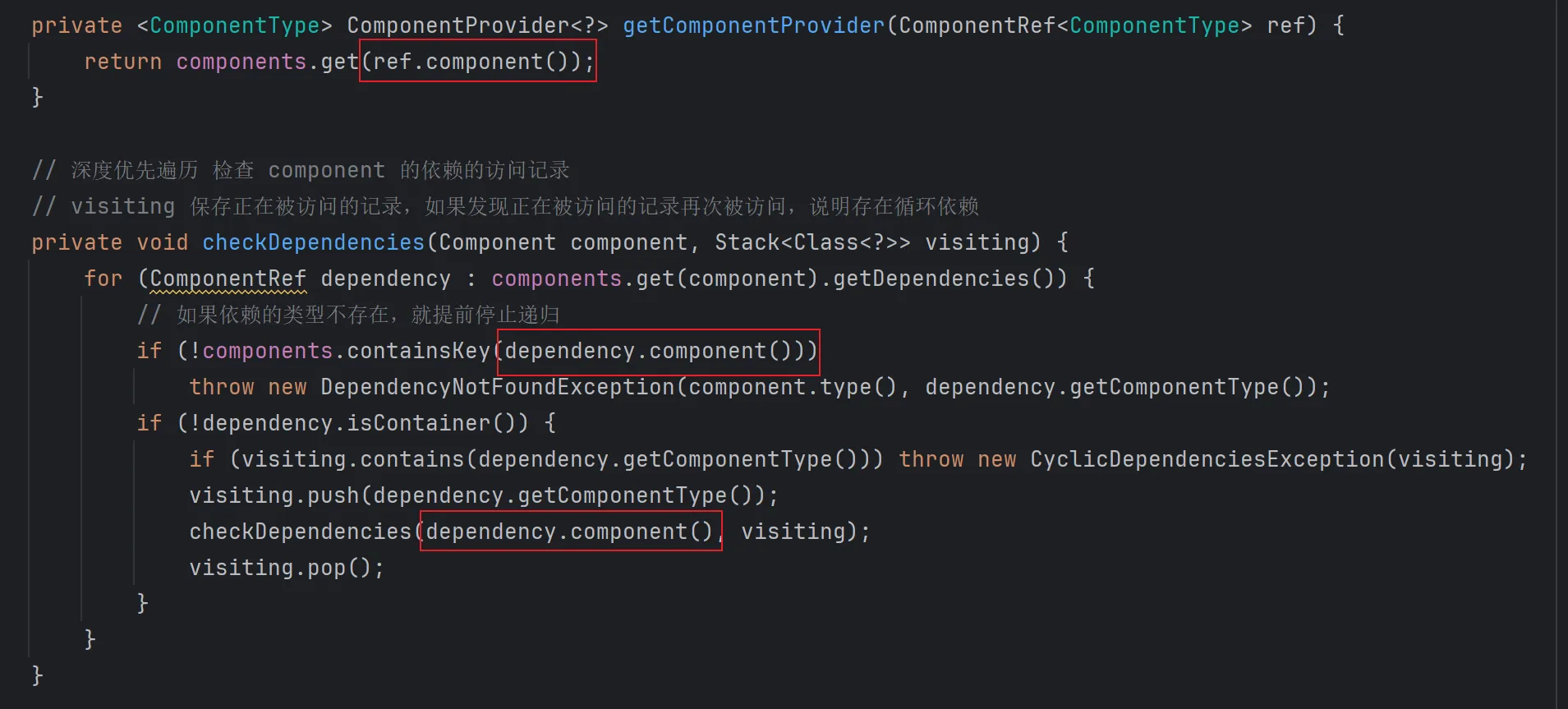
还可以发现,getQualifier 已无处使用,可以移除,qualifier 字段也无处使用,可以移除。
同时也可将 getComponentType 的实现替换为如下:
1   public Class<?> getComponentType() {
2       return component.type();
3   }
接着,期望移除 component,先找到 component 在哪里被使用。
一个地方是在 equals 和 hashCode 方法中被使用,先重新生成这两个方法,新生成的方法不要使用 componentType 字段。
其他使用的地方就是在 init 方法中,修改 init 方法为:
1   private void init(Type type, Annotation qualifier) {
2       if (type instanceof ParameterizedType) {
3           this.container = ((ParameterizedType) type).getRawType();
4           Class<?> componentType = (Class<?>) ((ParameterizedType) type).getActualTypeArguments()[0];
5           this.component = new Component(componentType, qualifier);
6       } else {
7           this.component = new Component((Class<?>) type, qualifier);
8       }
9   }
移除 componentType 字段。
重构测试
测试文档化
从测试文档化的角度来讲,下面的两个测试是不需要的。
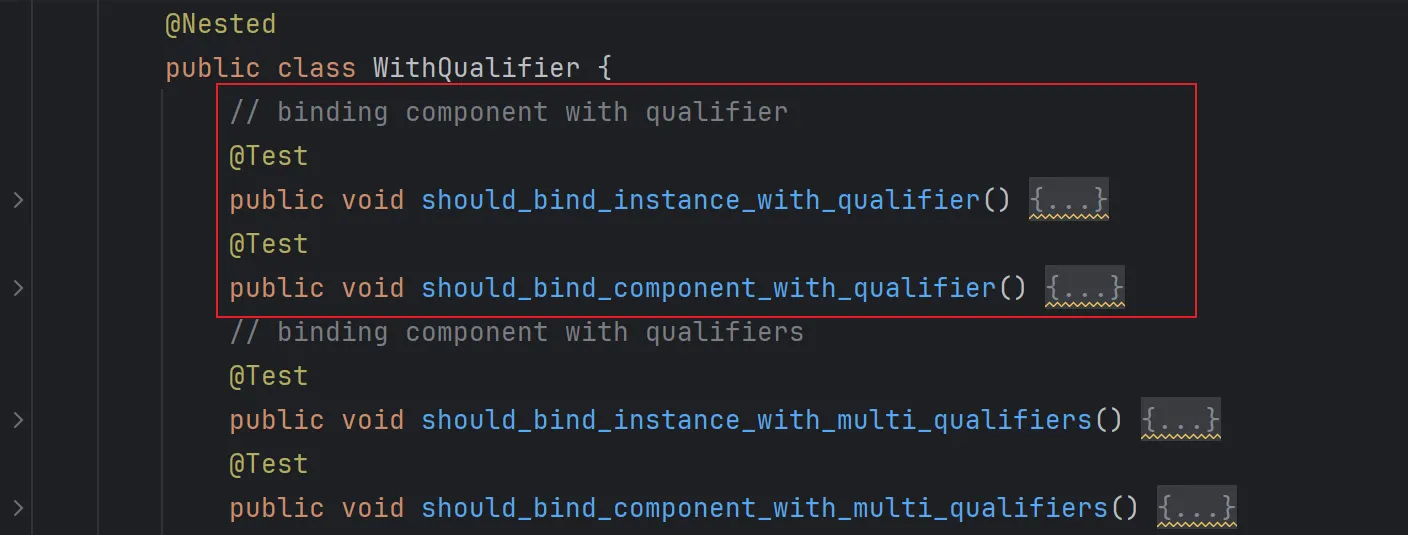
这两个测试,是驱动我们开发的记录,但是不应该作为最终的文档形式。
自定义 Qualifier
1   @java.lang.annotation.Documented
2   @java.lang.annotation.Retention(RUNTIME)
3   @jakarta.inject.Qualifier
4   @interface AnotherOne {
5   }
6
7   record AnotherOneLiteral() implements AnotherOne {
8       @Override
9       public Class<? extends Annotation> annotationType() {
10          return AnotherOne.class;
11      }
12  }
bind 时使用自定义注解:
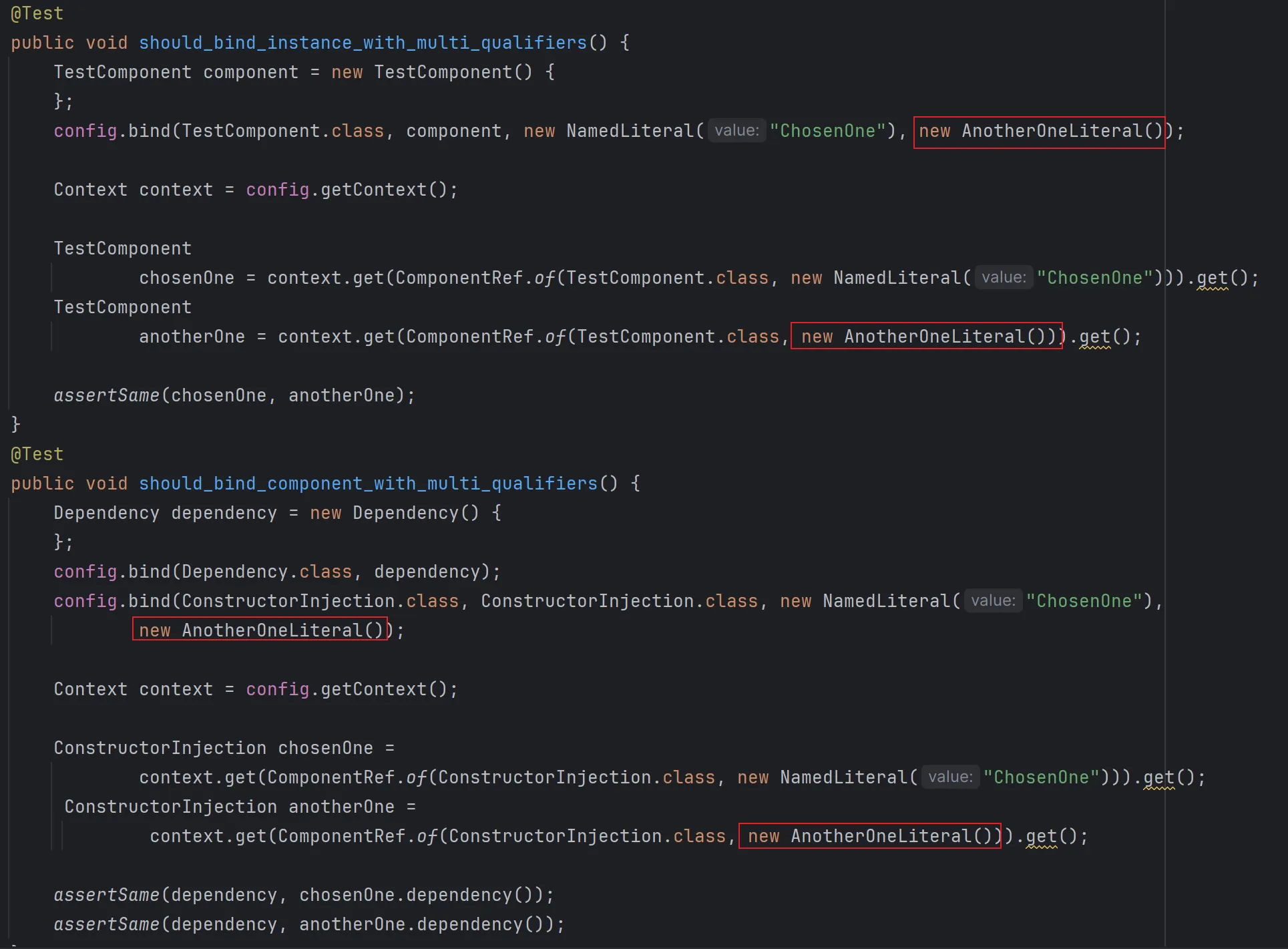
非法的 Qualifier
验证的是非 Qualifier 注解标记的情况。
需要先创建一个非 Qualifier 的注解的包装
1   record TestLiteral() implements Test {
2       @Override
3       public Class<? extends Annotation> annotationType() {
4           return Test.class;
5       }
6 }- 构造绑定实例的测试:
1   // TODO throw illegal component if illegal qualifier
2   @Test
3   public void should_throw_exception_if_illegal_qualifier_given_to_instance() {
4       TestComponent component = new TestComponent() {
5       };
6       assertThrows(IllegalComponentException.class, () -> config.bind(TestComponent.class, component, new TestLiteral()));
7   }
实现,绑定时检查是否包含非Qualifier的注解:
1   public <Type> void bind(Class<Type> type, Type instance, Annotation... qualifiers) {
2       if (Arrays.stream(qualifiers).anyMatch(q -> !q.annotationType().isAnnotationPresent(Qualifier.class)))
3           throw new IllegalComponentException();
4       for (Annotation qualifier : qualifiers)
5           components.put(new Component(type, qualifier), context -> instance);
6 }- 构造绑定组件的测试:
1   @Test
2   public void should_throw_exception_if_illegal_qualifier_given_to_component() {
3       assertThrows(IllegalComponentException.class,
4               () -> config.bind(ConstructorInjection.class, ConstructorInjection.class, new TestLiteral()));
5   }
实现,同样的绑定时检查是否包含非Qualifier的注解:
1   public <Type, Implementation extends Type>
2   void bind(Class<Type> type, Class<Implementation> implementation, Annotation... qualifiers) {
3       if (Arrays.stream(qualifiers).anyMatch(q -> !q.annotationType().isAnnotationPresent(Qualifier.class)))
4           throw new IllegalComponentException();
5       for (Annotation qualifier : qualifiers)
6           components.put(new Component(type, qualifier), new InjectionProvider(implementation));
7   }
依赖检查
Qualifier 标记的依赖不存在
测试指定了 Qualifier 的依赖的情况:
如果依赖的参数被 Qualifier 标记,那么从 容器中获取的依赖也必须被 Qualifier 标记,否则也要抛出 DependencyNotFoundException 异常。
1   // TODO dependency missing if qualifier not match
2   @Test
3   public void should_throw_exception_if_dependency_not_found_with_qualifier() {
4
5       config.bind(Dependency.class, new Dependency() {
6       });
7       config.bind(InjectConstructor.class, InjectConstructor.class);
8
9       assertThrows(DependencyNotFoundException.class, () -> config.getContext());
10
11  }
12
13  static class InjectConstructor {
14      @Inject
15      public InjectConstructor(@AnotherOne Dependency dependency) {
16      }
17  }
目前的依赖检查的实现是基于 CompronentProvider 中的 getDependencies 方法。
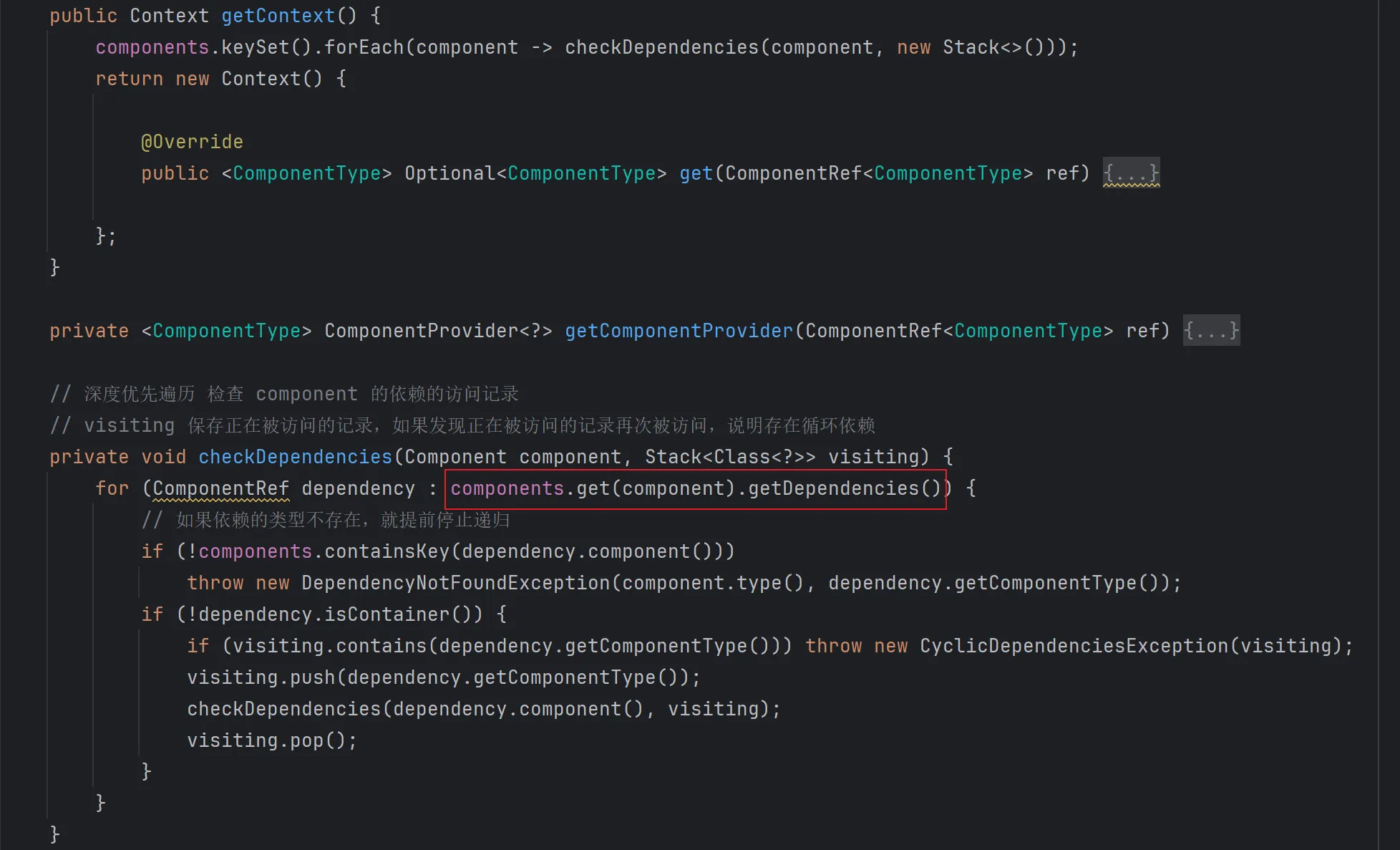
但是目前获取依赖时并没有区分被 Qualifier 标记的情况。所以想要实现依赖缺失的检查还需要修改 CompronentProvider 中的 getDependencies 方法。
这样就衍生出,include qualifier with dependency 的测试。这属于 InjectionTest 测试上下文的范畴。
分别在 InjectionTest 的 ConstructorInjection、FieldInjection、MethodInjection 中的 WithQualifier 测试分组中增加任务:
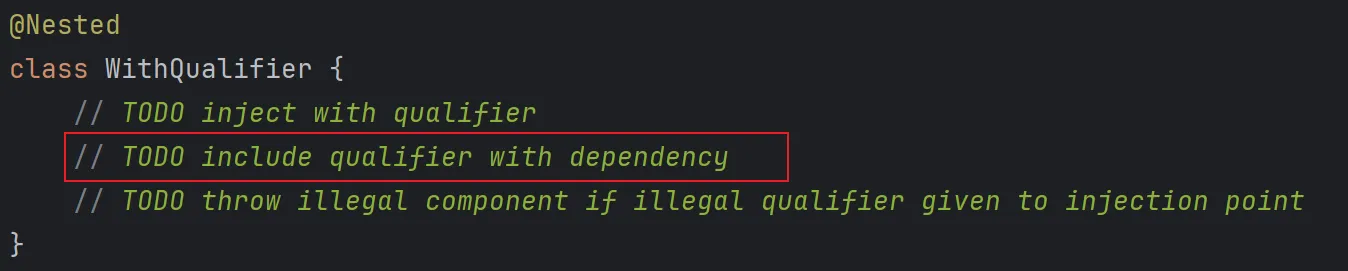
构造函数注入被 Qualifier 标注的测试:
1   // TODO include qualifier with dependency
2   static class InjectConstructor {
3       @Inject
4       public InjectConstructor(@Named("ChosenOne") Dependency dependency) {
5       }
6   }
7   @Test
8   public void should_include_qualifier_with_dependency() {
9       InjectionProvider<InjectConstructor> provider = new InjectionProvider<>(InjectConstructor.class);
10
11      assertArrayEquals(new ComponentRef[]{ComponentRef.of(Dependency.class, new NamedLiteral("ChosenOne"))},
12              provider.getDependencies().toArray(ComponentRef[]::new));
13  }
实现,需要修改以下代码:
1   @Override
2   public List<ComponentRef> getDependencies() {
3       return Stream.concat(
4                       Stream.concat(Arrays.stream(injectConstructor.getParameters()).map(Parameter::getParameterizedType),
5                               injectFields.stream().map(Field::getGenericType)),
6                       injectMethods.stream().flatMap(m -> Arrays.stream(m.getGenericParameterTypes())))
7               .map(ComponentRef::of).toList();
8   }
目前并没有考虑标注的情况。
修改 Provider 中的实现,获取依赖时在返回的 ComponentRef 应包含注解的信息。
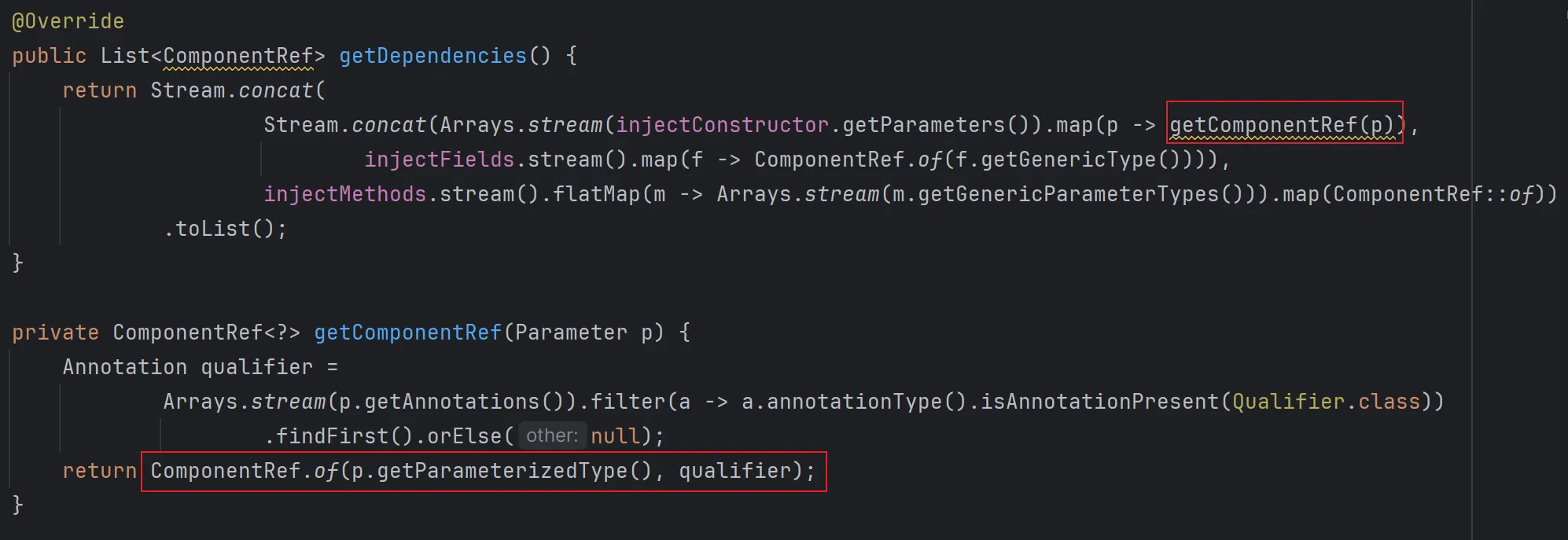
此外,判断 Named 于 NamedLiteral 是否相等,还需要修改 NamedLiteral 中的 equals 方法,因为是测试,所以只需要一个简单的实现。
如果是生产代码中,应该根据 Annotation 中规范的方式编写。
1   @Override
2   public boolean equals(Object o) {
3       if (o instanceof jakarta.inject.Named named) return value.equals(named.value());
4       return false;
5   }
运行测试通过。
同时,should_throw_exception_if_dependency_not_found_with_qualifier 测试也将通过。
DependencyNotFoundException 信息优化
目前 DependencyNotFoundException 中并不包含 Qualifier 注解的信息。
1   public class DependencyNotFoundException extends RuntimeException {
2       private Class<?> dependency;
3       private Class<?> component;
4
5       public DependencyNotFoundException(Class<?> component, Class<?> dependency) {
6           this.dependency = dependency;
7           this.component = component;
8       }
9
10      public Class<?> getDependency() {
11          return dependency;
12      }
13
14      public Class<?> getComponent() {
15          return component;
16      }
17  }
如果我们还需要知道异常中注解的信息,可以修改测试,增加如下校验:
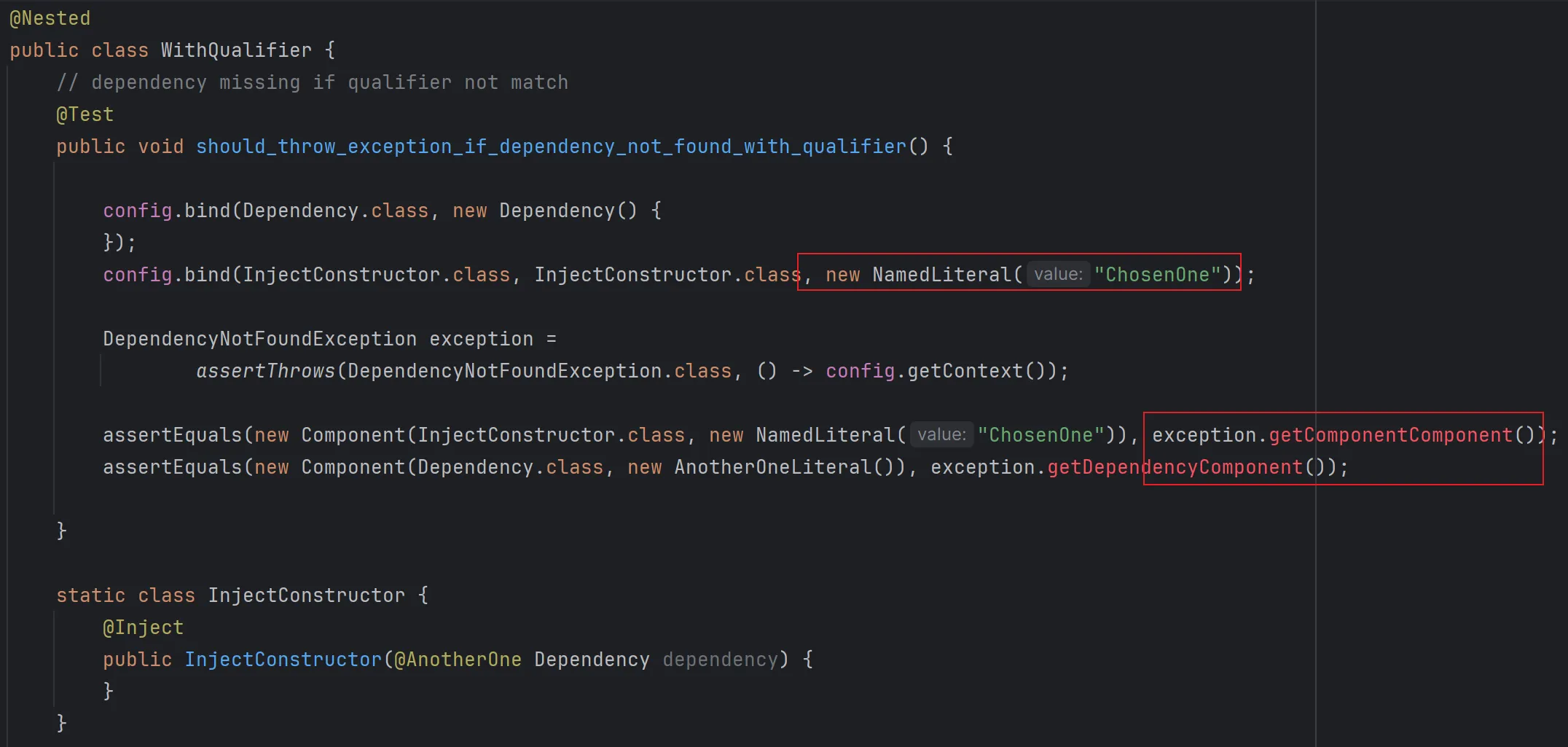
在 DependencyNotFoundException 中新建两个方法,分别用于获取造成异常的 component 和 dependency 的信息。
DependencyNotFoundException 重构为:
增加两个 Component 类型的字段和对应的 getter,以及构造函数。
1   public class DependencyNotFoundException extends RuntimeException {
2       private Class<?> dependency;
3       private Class<?> component;
4       private Component dependencyComponent;
5       private Component componentComponent;
6
7       public DependencyNotFoundException(Class<?> component, Class<?> dependency) {
8           this.dependency = dependency;
9           this.component = component;
10      }
11
12      public DependencyNotFoundException(Component componentComponent, Component dependencyComponent) {
13          this.dependencyComponent = dependencyComponent;
14          this.componentComponent = componentComponent;
15      }
16
17      public Class<?> getDependency() {
18          return dependency;
19      }
20
21      public Class<?> getComponent() {
22          return component;
23      }
24
25      public Component getDependencyComponent() {
26          return this.dependencyComponent;
27      }
28
29      public Component getComponentComponent() {
30          return this.componentComponent;
31      }
32  }
同样的 AnotherOneLiteral 也需要实现 equals 方法,否则 AnotherOneLiteral 和 AnotherOne 的比较会异常
1   record AnotherOneLiteral() implements AnotherOne {
2       @Override
3       public Class<? extends Annotation> annotationType() {
4           return AnotherOne.class;
5       }
6
7       @Override
8       public boolean equals(Object o) {
9           return o instanceof AnotherOne;
10      }
11  }
实现,找到唯一会创建 DependencyNotFoundException 的地方是 ContextConfig 中的 checkDependencies 方法,修改为:
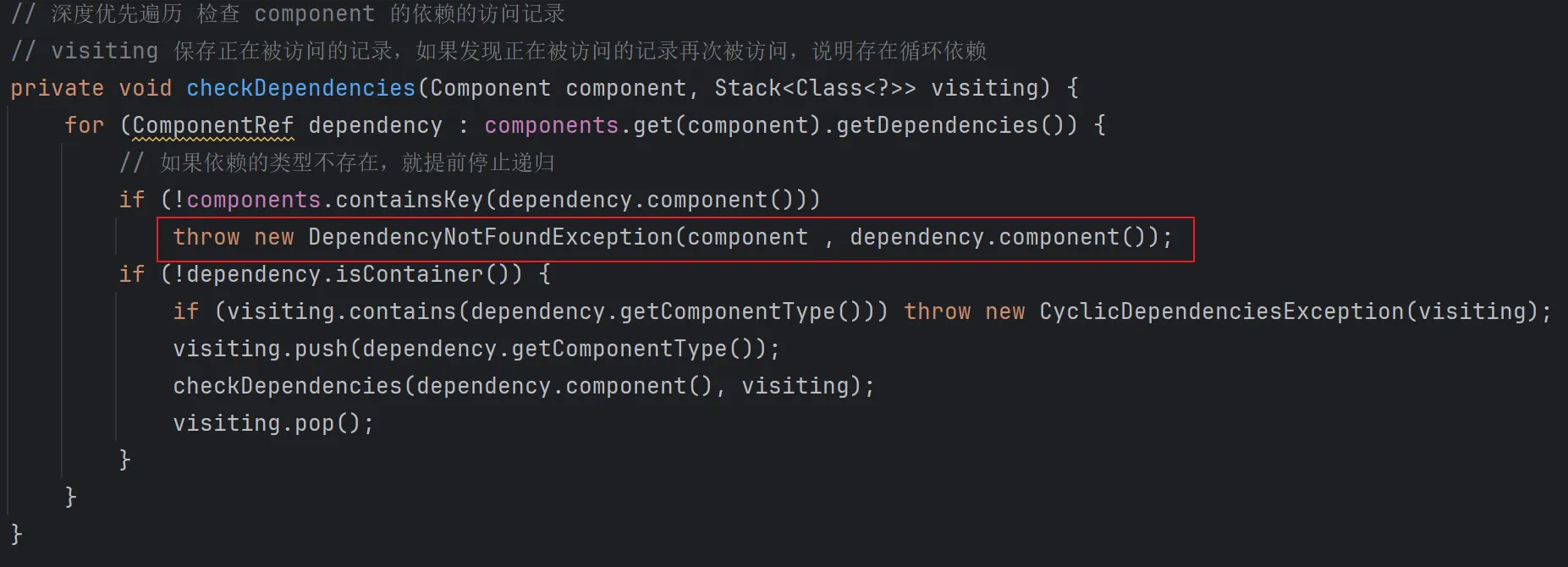
运行测试,should_throw_exception_if_dependency_not_found_with_qualifier 将通过。
但是,因为修改了返回的 DependencyNotFoundException 中的信息,所以之前创建的检查依赖缺失的测试将失败:
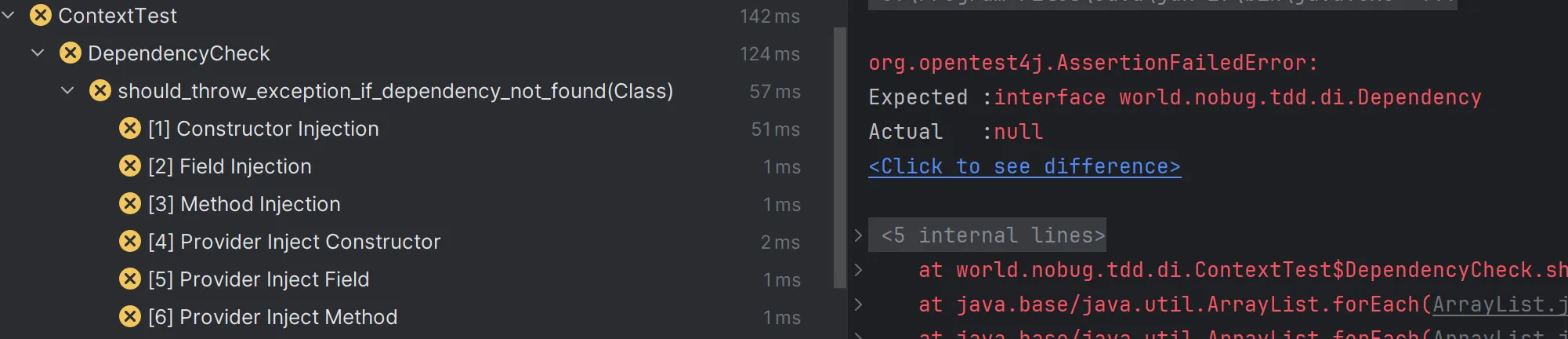
因为当前异常中的 dependency 和 component 并没有被赋值:
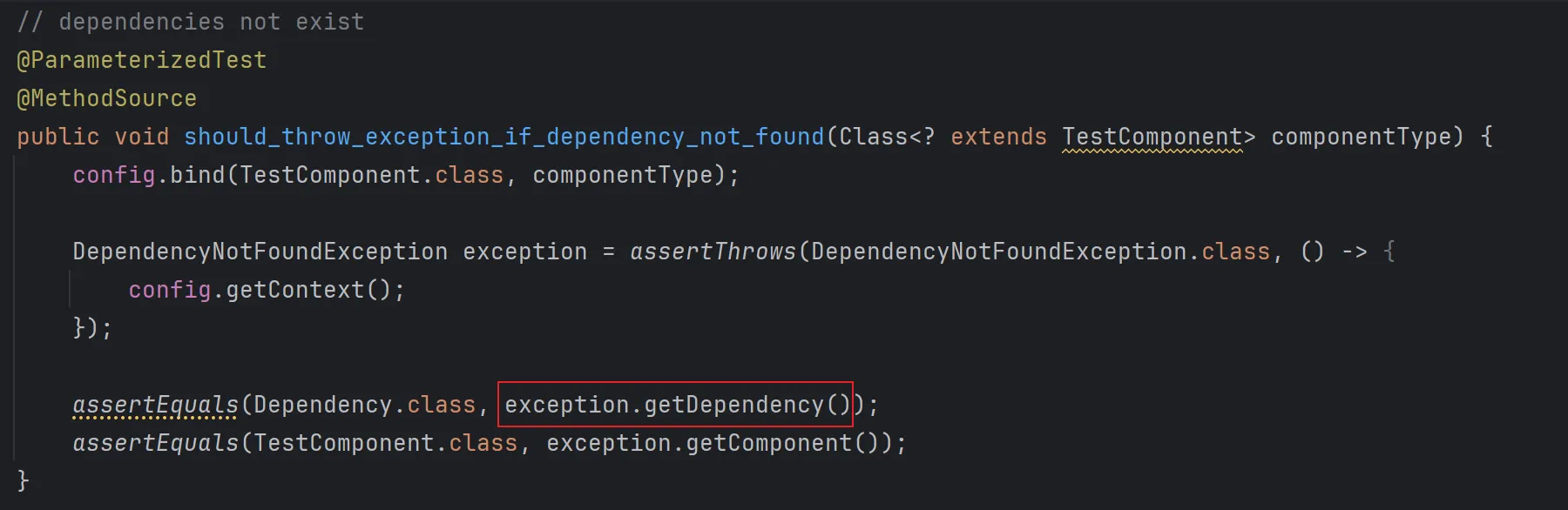
修改 DependencyNotFoundException 方法返回的信息:
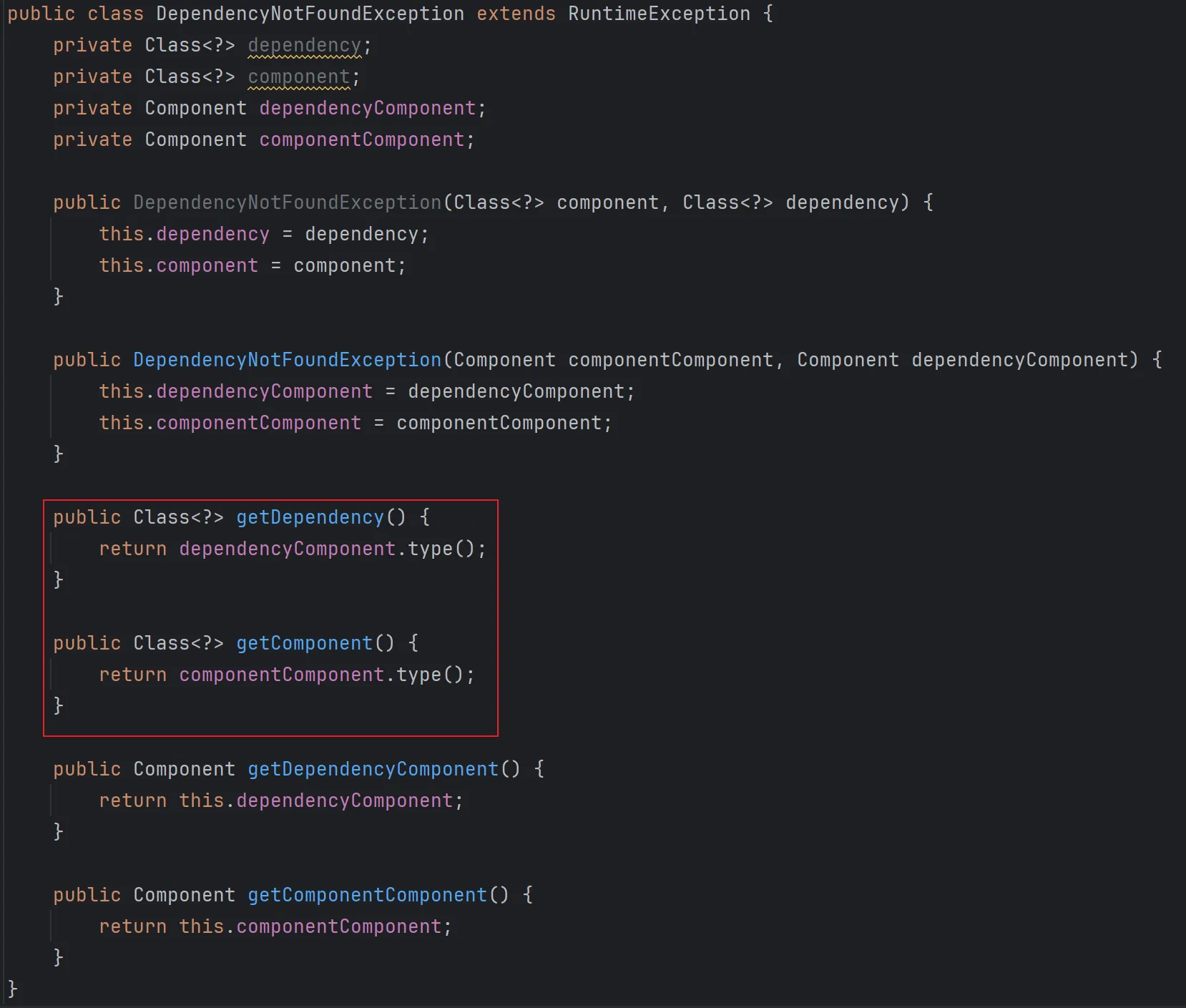
删除未使用的字段的构造函数。
更进一步,将使用 getDependency 和 getComponent 方法的地方,替换为使用 getDependencyComponent 和 getComponentComponent:
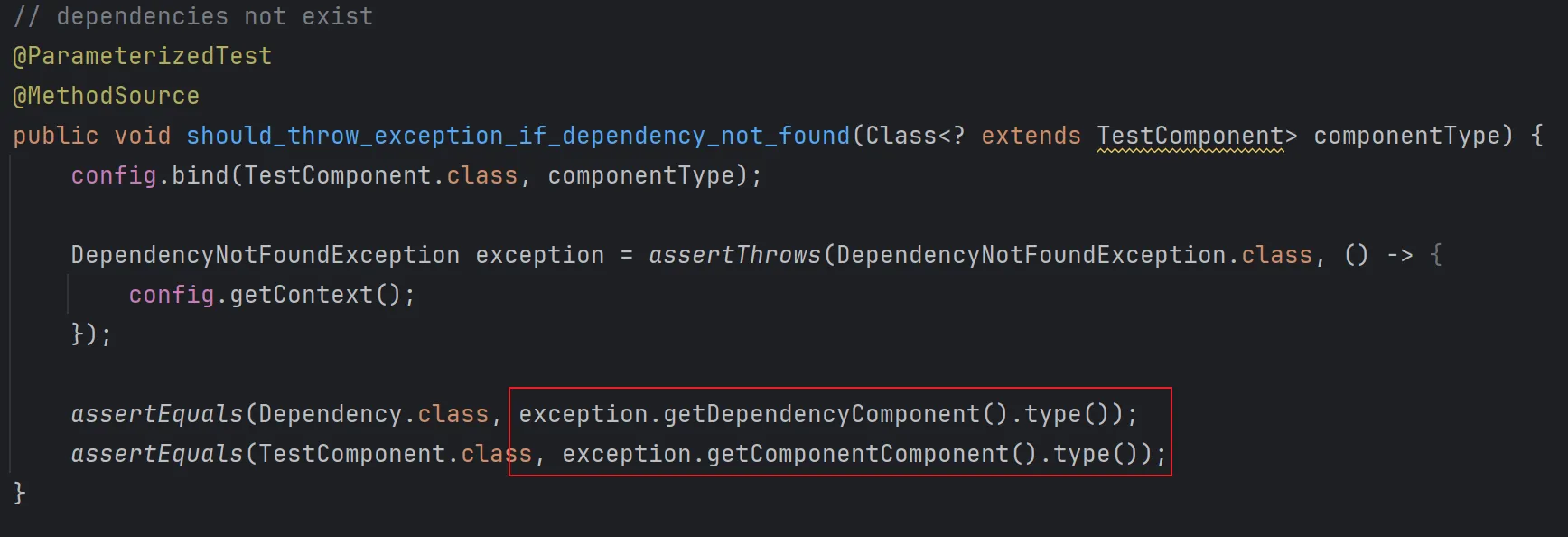
至此,就没有地方使用 getDependency 和 getComponent 方法。可移除,移除后可以对 DependencyNotFoundException 中的字段和方法进行重命名。
最终,DependencyNotFoundException 重构为:
1   public class DependencyNotFoundException extends RuntimeException {
2       private Component dependency;
3       private Component component;
4
5       public DependencyNotFoundException(Component component, Component dependency) {
6           this.dependency = dependency;
7           this.component = component;
8       }
9
10      public Component getDependency() {
11          return this.dependency;
12      }
13
14      public Component getComponent() {
15          return this.component;
16      }
17  }
循环依赖
构造测试:
我们期望: A -> @AnotherOne A -> @Named A 不构成循环依赖,因为 Qualifier + 类型 的组合构造类型的key
1   // TODO check cyclic dependencies with qualifier
2   // A -> @AnotherOne A -> @Named A
3   static class AnotherOneDependency implements Dependency {
4       @Inject
5       public AnotherOneDependency(@jakarta.inject.Named("ChosenOne") Dependency dependency) {
6       }
7   }
8   static class NotCyclicDependency implements Dependency {
9       @Inject
10      public NotCyclicDependency(@AnotherOne Dependency dependency) {
11      }
12  }
13  @Test
14  public void should_not_throw_exception_if_component_with_same_type_tagged_with_different_qualifier() {
15      Dependency instance = new Dependency() {
16      };
17      config.bind(Dependency.class, instance, new NamedLiteral("ChosenOne"));
18      config.bind(Dependency.class, AnotherOneDependency.class, new AnotherOneLiteral());
19      config.bind(Dependency.class, NotCyclicDependency.class);
20
21      assertDoesNotThrow(() -> config.getContext());
22  }
这里还需要为 NamedLiteral 创建 hashCode 方法:
1   record NamedLiteral(String value) implements jakarta.inject.Named {
2       @Override
3       public Class<? extends Annotation> annotationType() {
4           return jakarta.inject.Named.class;
5       }
6
7       @Override
8       public boolean equals(Object o) {
9           if (o instanceof jakarta.inject.Named named) return value.equals(named.value());
10          return false;
11      }
12
13      @Override
14      public int hashCode() {
15          return "value".hashCode() * 127 ^ value.hashCode();
16      }
17  }
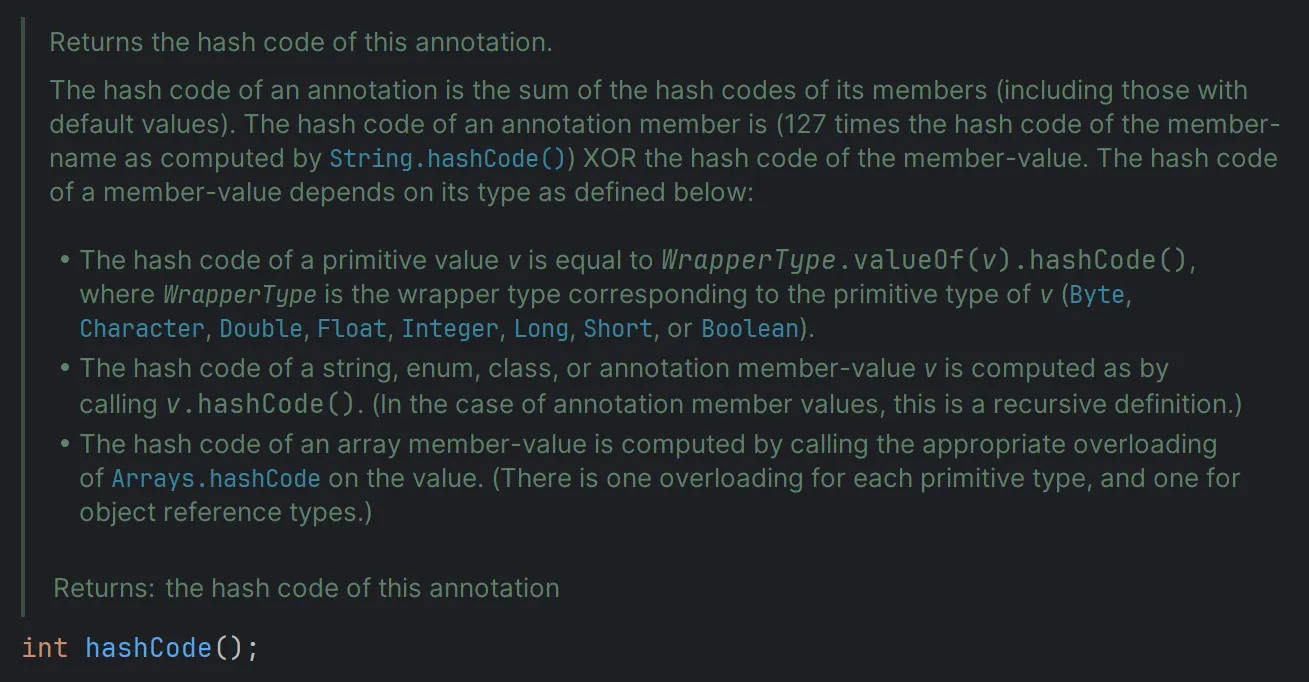
hashCode 方法需要根据 Annotation 的规范创建:
运行测试,将抛出 CyclicDependenciesException
找到抛出 CyclicDependenciesException 的代码,目前只有 ContextConfig 中的 checkDependencies 方法会抛出 CyclicDependenciesException
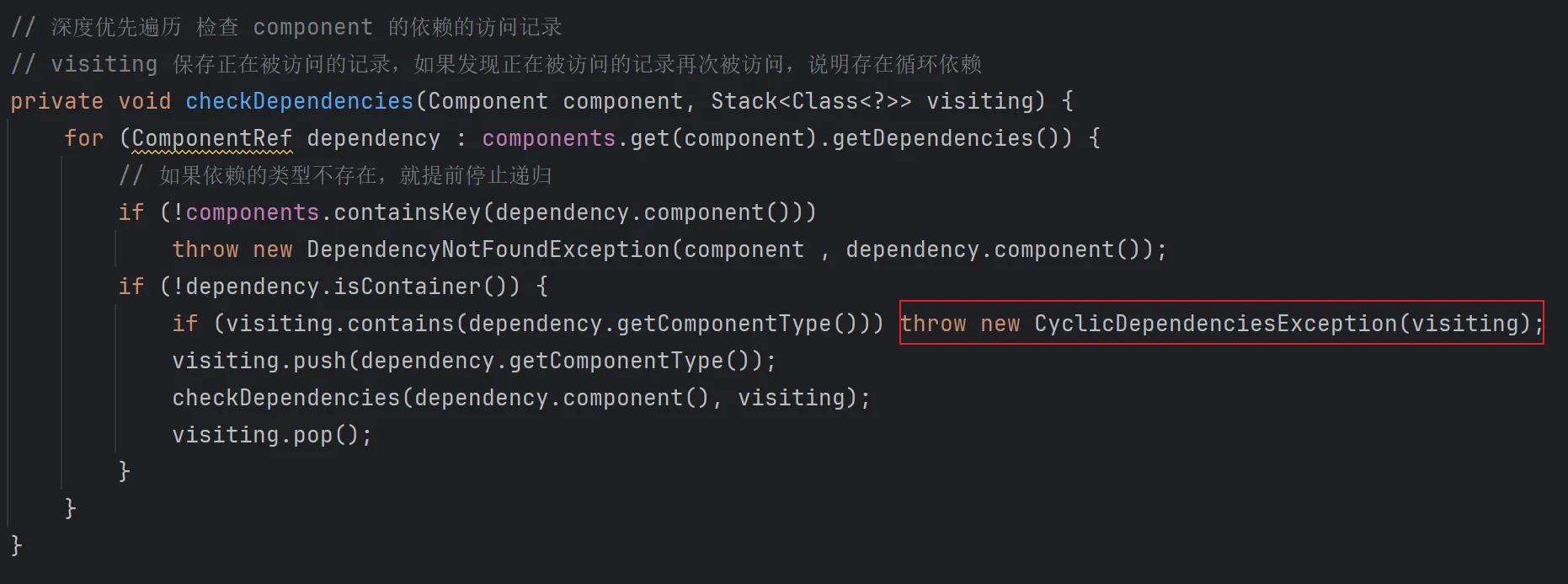
原因是 visiting 栈中只包含 Class 的信息,没有 Qualifier 注解相关的信息。
那么需要把 Stack 中的类型由 Class<?> 改为 Component,并将使用 visiting 的地方都改为 Component:
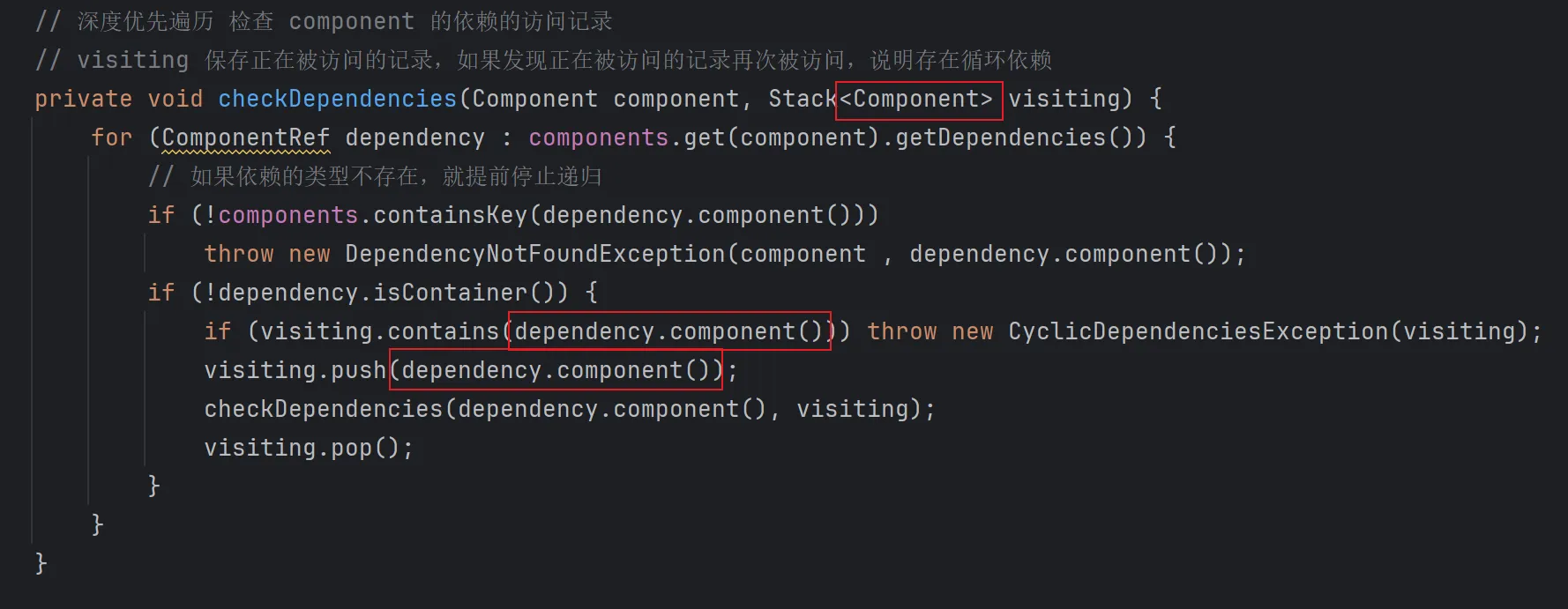
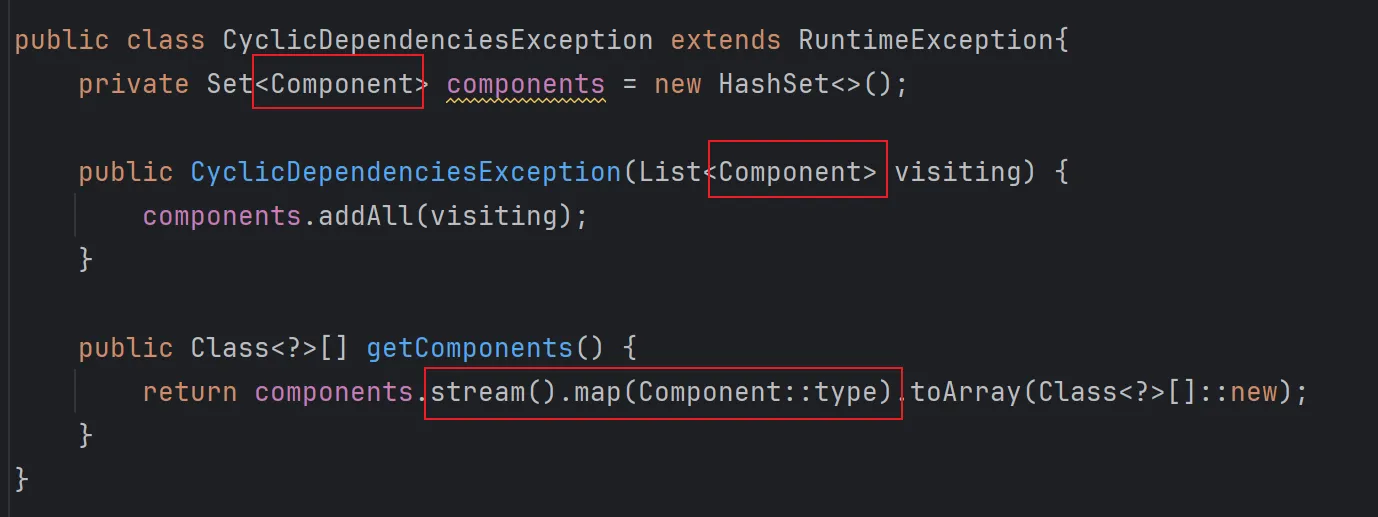
运行测试,通过。
ComponentProvider 检查 Qualifier 依赖
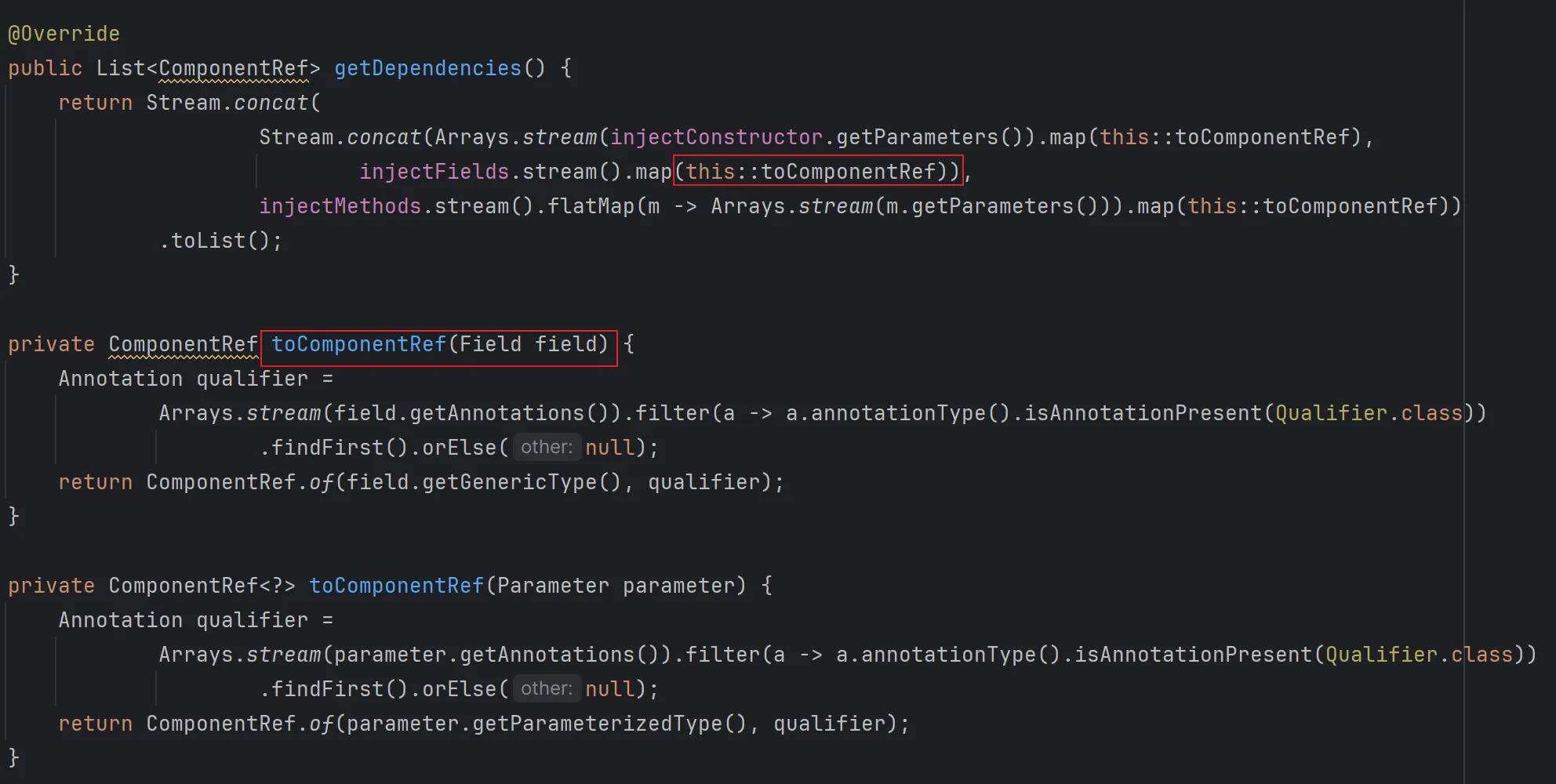
检查 getDependencies 获取依赖时,返回正确的依赖,前面已经完成了构造器注入 Qualifier 依赖的检查。还需要检查字段注入和方法注入 Qualifier 依赖时的检查。
这里先检查方法注入时的情况。
构造测试,位于 InjectionTest.MethodInjection.WithQualifier中:
1   // TODO include qualifier with dependency
2   static class InjectMethod {
3       @Inject
4       void install(@Named("ChosenOne") Dependency dependency) {
5
6       }
7   }
8   @Test
9   public void should_include_dependency_with_qualifier() {
10      InjectionProvider<InjectMethod> provider = new InjectionProvider<>(InjectMethod.class);
11
12      assertArrayEquals(new ComponentRef[]{ComponentRef.of(Dependency.class, new NamedLiteral("ChosenOne"))},
13              provider.getDependencies().toArray(ComponentRef[]::new));
14  }
实现:
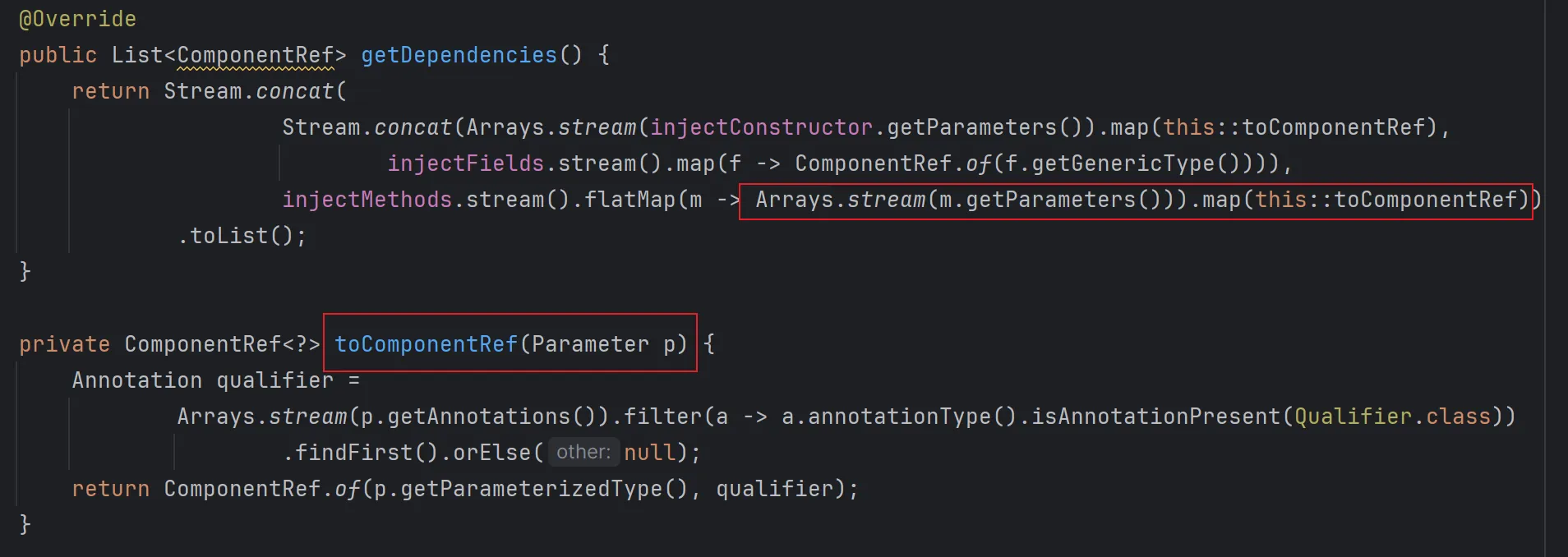
构造字段注入 Qualifier 依赖的测试:
1   // TODO include qualifier with dependency
2   static class InjectField {
3       @Inject
4       @Named("ChosenOne") Dependency dependency;
5   }
6   @Test
7   public void should_include_dependency_with_qualifier() {
8       InjectionProvider<InjectField> provider = new InjectionProvider<>(InjectField.class);
9
10      assertArrayEquals(new ComponentRef[]{ComponentRef.of(Dependency.class, new NamedLiteral("ChosenOne"))},
11              provider.getDependencies().toArray(ComponentRef[]::new));
12  }
实现:
inject with qualifier
实现注入被 Qualifier 标记的依赖的功能。
构造器注入被 Qualifier 标记的依赖
通过构造函数注入的方式,注入被 Qualifier 标记的组件,构造以下测试:
1   // TODO inject with qualifier
2   @Test
3   public void should_inject_dependency_with_qualifier_via_constructor() {
4       InjectionProvider<InjectConstructor> provider = new InjectionProvider<>(InjectConstructor.class);
5
6       InjectConstructor instance = provider.get(context);
7       assertSame(dependency, instance.dependency);
8   }
9
10  static class InjectConstructor {
11      Dependency dependency;
12      @Inject
13      public InjectConstructor(@Named("ChosenOne") Dependency dependency) {
14          this.dependency = dependency;
15      }
16  }
运行测试,测试会通过。
这是假阴性。
因为使用了测试替身,在测试替身构造的结果和生产代码都没发生改变的情况下,就不会出现错误。就会导致假阴性。
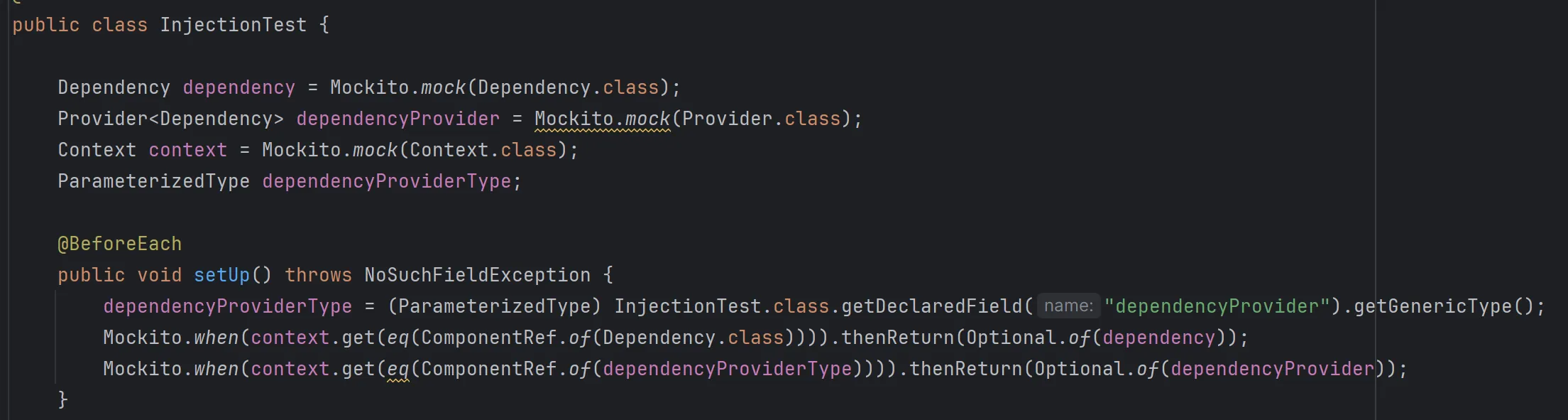
无法直接修改 setUp 中的行为,因为现在直接修改的话,会产生大量的错误。
需要在当前测试中,重置 sutUp 中的行为(预期),也就是重新设置测试夹具:
1   @Nested
2   class WithQualifier {
3
4       @BeforeEach
5       public void setUp() {
6           Mockito.reset(context);
7           Mockito.when(context.get(eq(ComponentRef.of(Dependency.class, new NamedLiteral("ChosenOne"))))).thenReturn(Optional.of(dependency));
8       }
9       // TODO inject with qualifier
10      @Test
11      public void should_inject_dependency_with_qualifier_via_constructor() {
12          InjectionProvider<InjectConstructor> provider = new InjectionProvider<>(InjectConstructor.class);
13
14          InjectConstructor instance = provider.get(context);
15          assertSame(dependency, instance.dependency);
16      }
17  }
此时运行测试,将不通过。
原因是,使用 get 方法获取组件时,会去容器中查找组件的依赖,并赋值到组件中。但是目前去容器中查找的方法,并没有携带 Qualifier 标记的信息,只包含了类型的信息。
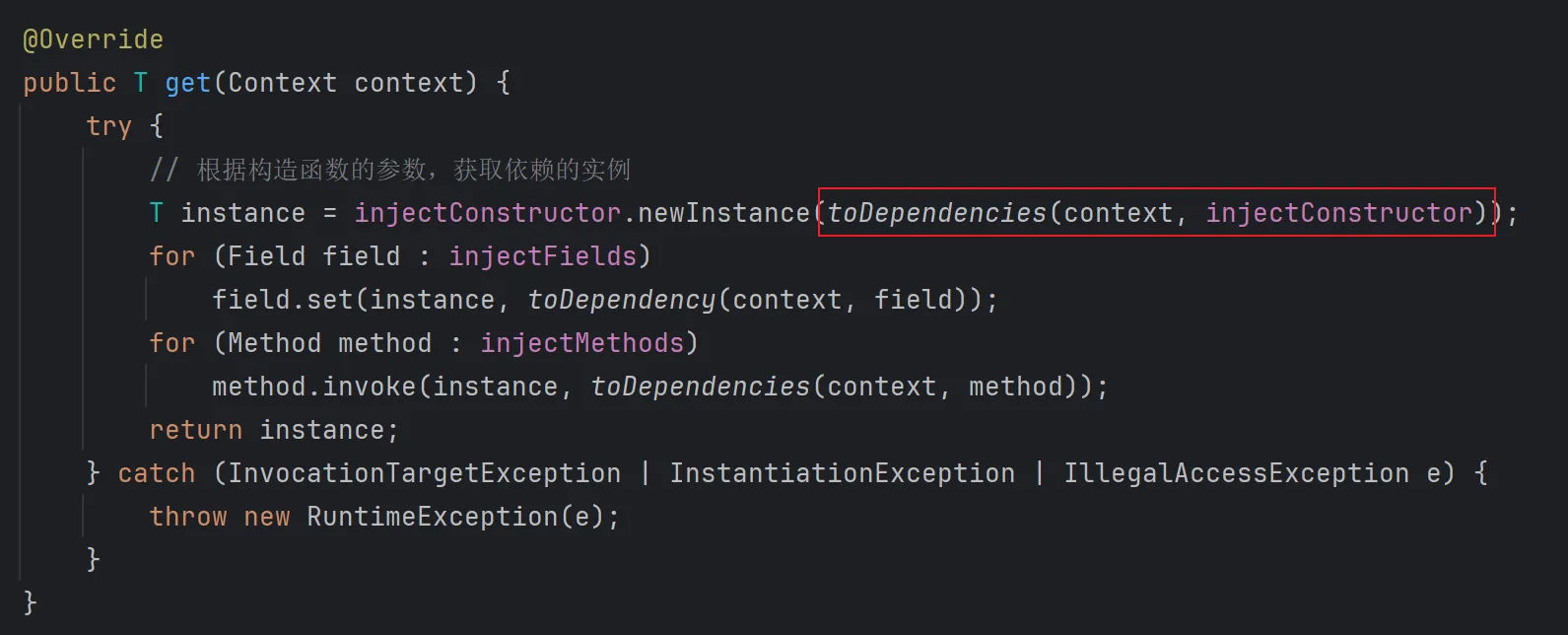

实现,即查找依赖时需要从容器中获取带有 qualifier
1 context.get(ComponentRef.of(type, qualifier))提取一个新方法,在其中获取参数的注解,并传递给 toDependency 方法。
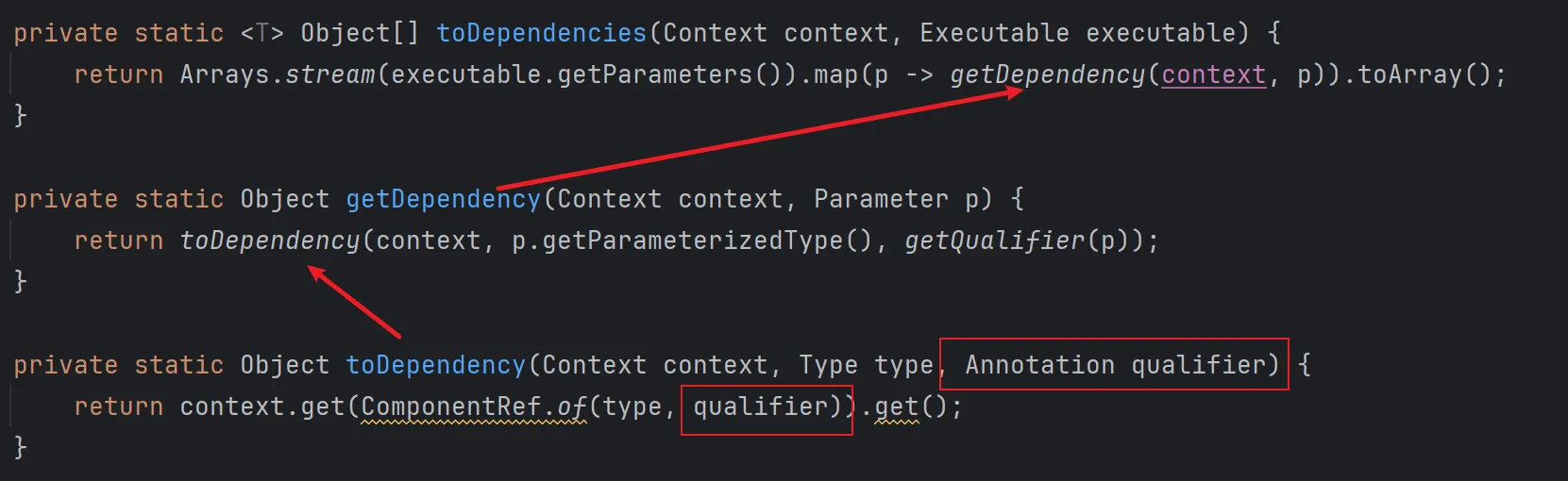
因为前面实现了一个获取方法参数的注解的功能,这里提取一个方法:
1   private static Annotation getQualifier(Parameter parameter) {
2           return Arrays.stream(parameter.getAnnotations()).filter(a -> a.annotationType().isAnnotationPresent(Qualifier.class))
3                   .findFirst().orElse(null);
4       }
运行测试,通过。
方法注入被 Qualifier 标记的依赖
通过构造函数注入的方式,注入被 Qualifier 标记的组件,构造以下测试:
1   @BeforeEach
2   public void setUp() {
3       Mockito.reset(context);
4       Mockito.when(context.get(eq(ComponentRef.of(Dependency.class, new NamedLiteral("ChosenOne"))))).thenReturn(Optional.of(dependency));
5   }
6
7   // inject with qualifier
8   @Test
9   public void should_inject_dependency_with_qualifier_via_method() {
10      InjectionProvider<InjectMethod> provider = new InjectionProvider<>(InjectMethod.class);
11
12      InjectMethod instance = provider.get(context);
13      assertSame(dependency, instance.dependency);
14  }
15
16  static class InjectMethod {
17      Dependency dependency;
18
19      @Inject
20      void install(@Named("ChosenOne") Dependency dependency) {
21          this.dependency = dependency;
22      }
23  }
运行测试,通过。因为方法注入和构造函数注入的内部实现是一样的,所以不需要修改生产代码。
字段注入被 Qualifier 标记的依赖
构造测试
1   @BeforeEach
2   public void setUp() {
3       Mockito.reset(context);
4       Mockito.when(context.get(eq(ComponentRef.of(Dependency.class, new NamedLiteral("ChosenOne"))))).thenReturn(Optional.of(dependency));
5   }
6
7   @Test
8   public void should_inject_dependency_with_qualifier_via_field() {
9       InjectionProvider<InjectField> provider = new InjectionProvider<>(InjectField.class);
10
11      InjectField instance = provider.get(context);
12      assertSame(dependency, instance.dependency);
13  }
同理需要修改 toDependency 的参数:
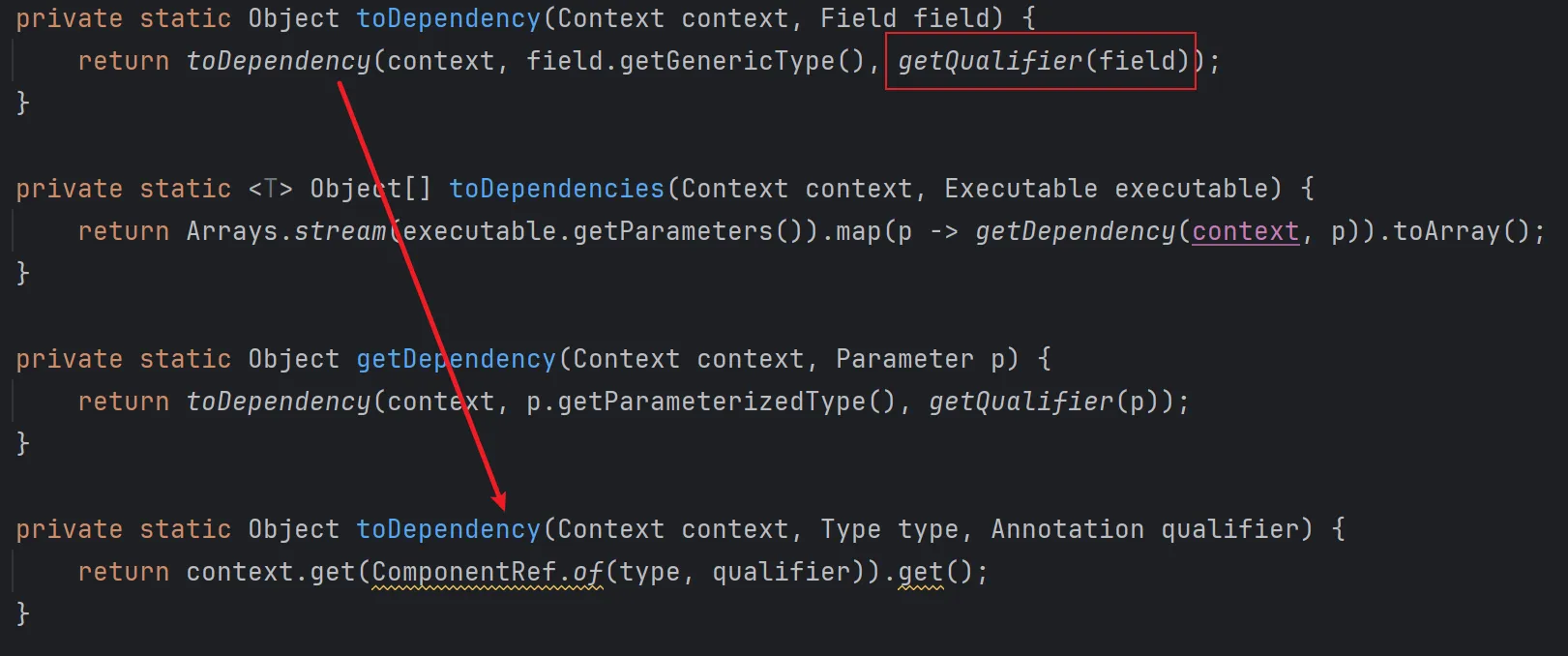
因为前面实现过获取 Field 中的注解的功能,这里提取一个方法。
1   private static Annotation getQualifier(Field field) {
2           return Arrays.stream(field.getAnnotations()).filter(a -> a.annotationType().isAnnotationPresent(Qualifier.class))
3                   .findFirst().orElse(null);
4       }
非法的 Qualifier 注入
非法注入的情况是指,同时使用两个 Qualifier 注解标注同一个依赖时的情况。
根据 JSR330 规范,同一个组件可以被多个 Qualifier 标记注册多个,但是依赖只能指定一个 Qualifier 注解。
构造器非法注入
构造测试:
1   // TODO throw illegal component if illegal qualifier given to injection point
2   static class MultiQualifierInjectConstructor {
3       @Inject
4       public MultiQualifierInjectConstructor(@Named("ChosenOne") @AnotherOne Dependency dependency) {
5       }
6   }
7   @Test
8   public void should_throw_exception_if_multi_qualifier_given_to_inject_constructor() {
9       // 需要在创建时检查依赖是否合法
10      assertThrows(IllegalComponentException.class,
11              () -> new InjectionProvider<>(MultiQualifierInjectConstructor.class));
12  }
运行测试,不通过,即不会抛出异常,我们需要的是抛出异常。
因为当前并没有在创建 InjectionProvider 时检查依赖是否合法,也没有去校验依赖被多个 Qualifier 标注的情况,目前只取其中一个 Qualifier 注解注册。
所以需要修改检查依赖的代码,并将检查依赖的代码加入到构造 Provider 时。
修改获取依赖参数上的 Qualifier 注解,判断注解的数量:
1   private static Annotation getQualifier(Parameter parameter) {
2       List<Annotation> qualifiers = Arrays.stream(parameter.getAnnotations())
3               .filter(a -> a.annotationType().isAnnotationPresent(Qualifier.class)).toList();
4       if (qualifiers.size() > 1) throw new IllegalComponentException();
5       return qualifiers.stream().findFirst().orElse(null);
6   }
并在构造函数中获取依赖(获取依赖时,会调用 getQualifier 方法,即会检查依赖上的 Qualifier 是否不合法)
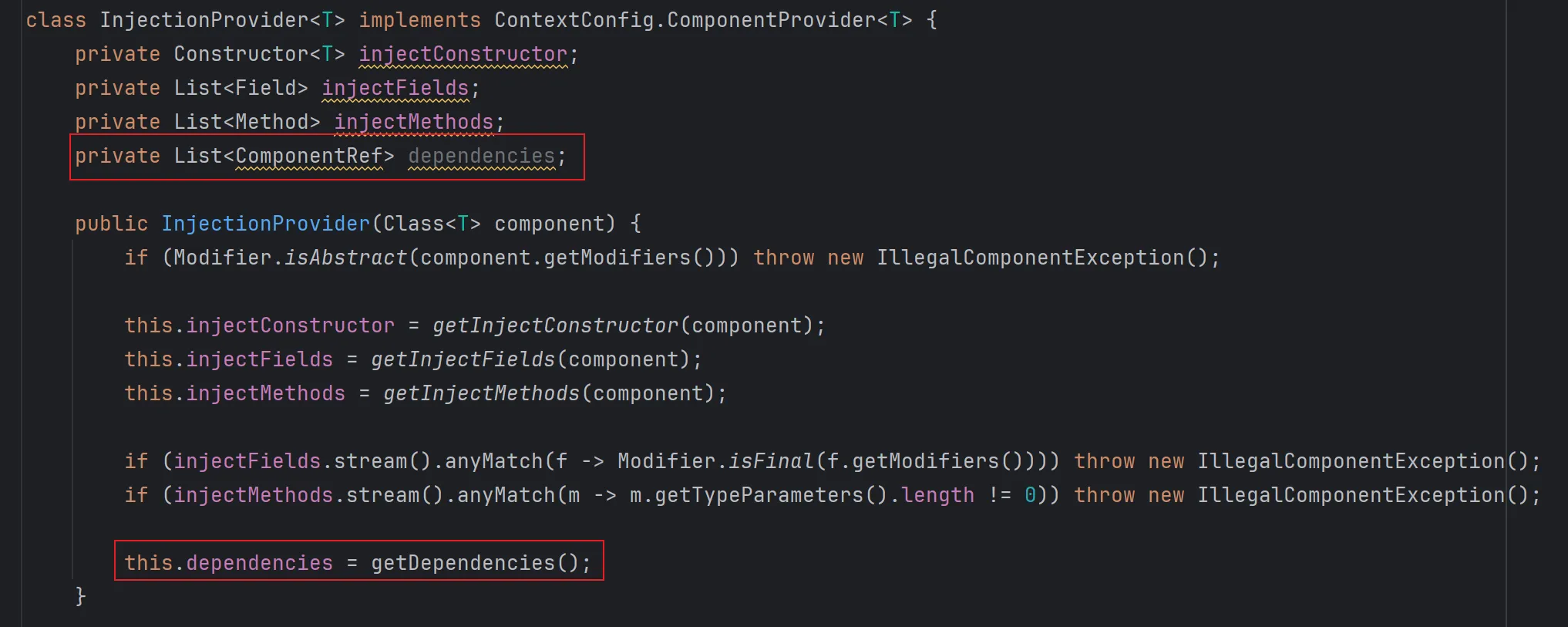
运行测试,通过。
方法非法注入
构造测试:
1   static class MultiQualifierInjectMethod {
2       Dependency dependency;
3       @Inject
4       public void install(@Named("ChosenOne") @AnotherOne Dependency dependency) {
5       }
6   }
7   @Test
8   public void should_throw_exception_if_multi_qualifier_given_to_inject_method() {
9       // 需要在创建时检查依赖是否合法
10      assertThrows(IllegalComponentException.class,
11              () -> new InjectionProvider<>(MultiQualifierInjectMethod.class));
12  }
运行测试,直接通过。因为方法注入的内部实现和构造器注入的内部实现一致,不需要修改生产代码。
字段非法注入
构造测试:
1   static class MultiQualifierInjectField {
2       @Inject
3       @Named("ChosenOne") @AnotherOne Dependency dependency;
4   }
5   @Test
6   public void should_throw_exception_if_multi_qualifier_given_to_inject_field() {
7       // 需要在创建时检查依赖是否合法
8       assertThrows(IllegalComponentException.class,
9               () -> new InjectionProvider<>(MultiQualifierInjectField.class));
10  }
同理,也需要修改 getQualifier 方法:
1   private static Annotation getQualifier(Field field) {
2       List<Annotation> qualifiers = Arrays.stream(field.getAnnotations())
3               .filter(a -> a.annotationType().isAnnotationPresent(Qualifier.class)).toList();
4       if (qualifiers.size() > 1) throw new IllegalComponentException();
5       return qualifiers.stream().findFirst().orElse(null);
6   }
运行测试,通过。
重构
合并两个 getQualifier
我们这里目前有两个内部实现完全一样的方法,分别是:getQualifier(Field field) 、getQualifier(Parameter parameter)
因为 Field 和 Parameter 实现了共同的 AnnotatedElement 接口,可以将这两个方法合并为一个。
1   private static Annotation getQualifier(AnnotatedElement parameter) {
2       List<Annotation> qualifiers = Arrays.stream(parameter.getAnnotations())
3               .filter(a -> a.annotationType().isAnnotationPresent(Qualifier.class)).toList();
4       if (qualifiers.size() > 1) throw new IllegalComponentException();
5       return qualifiers.stream().findFirst().orElse(null);
6   }
简化 toDependency 代码,减少调用层级
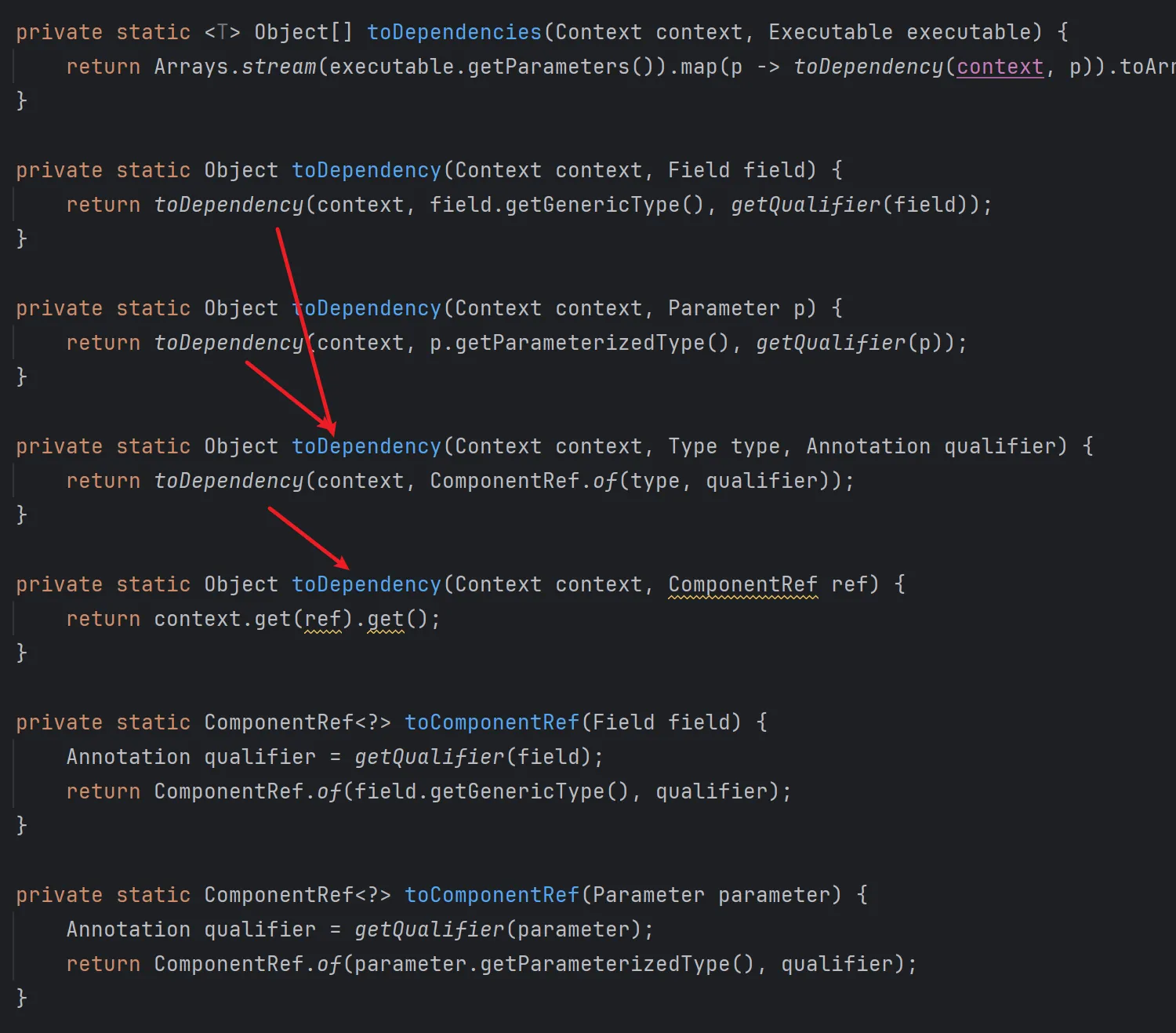
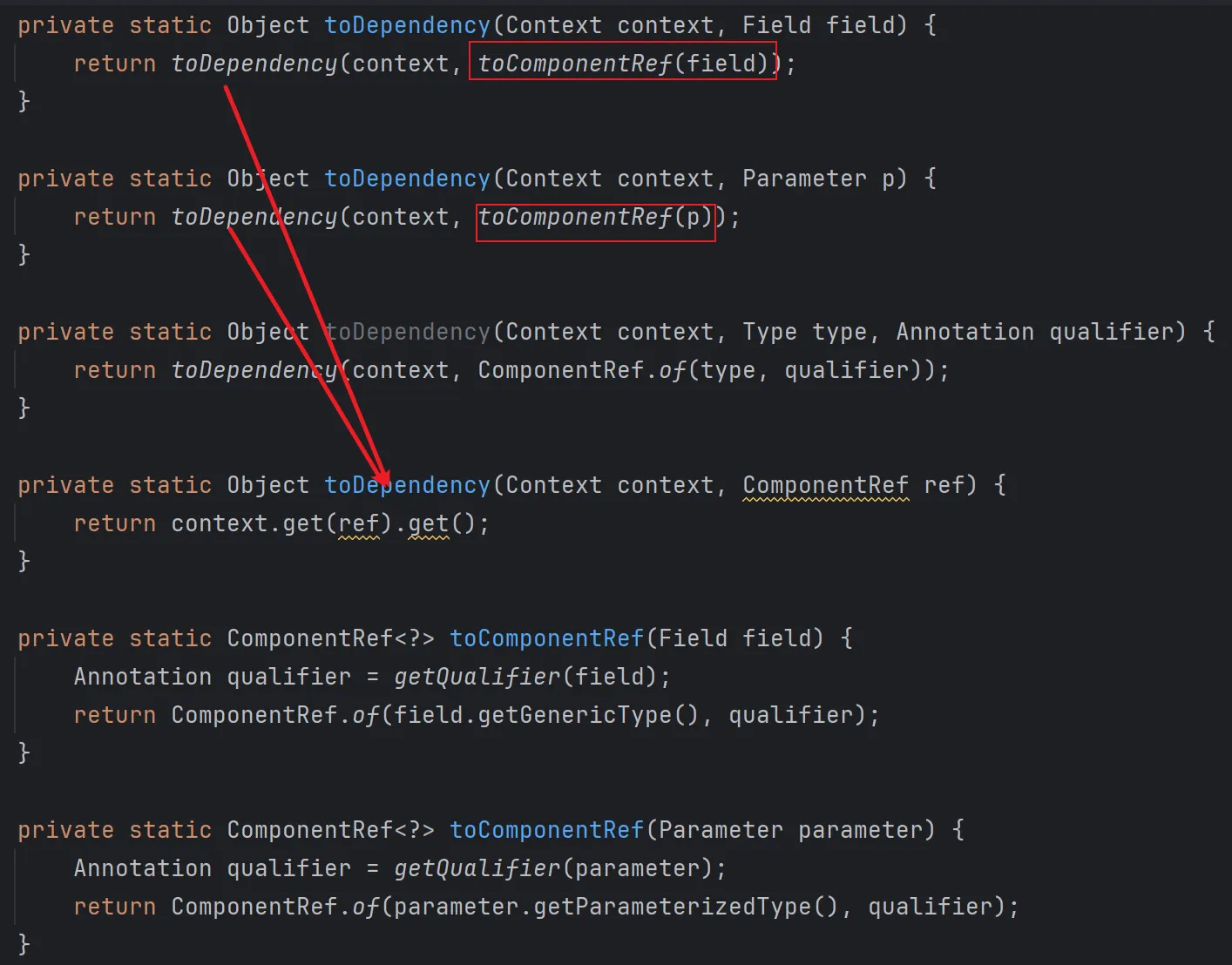
dependency 被获取了两次,属于重复
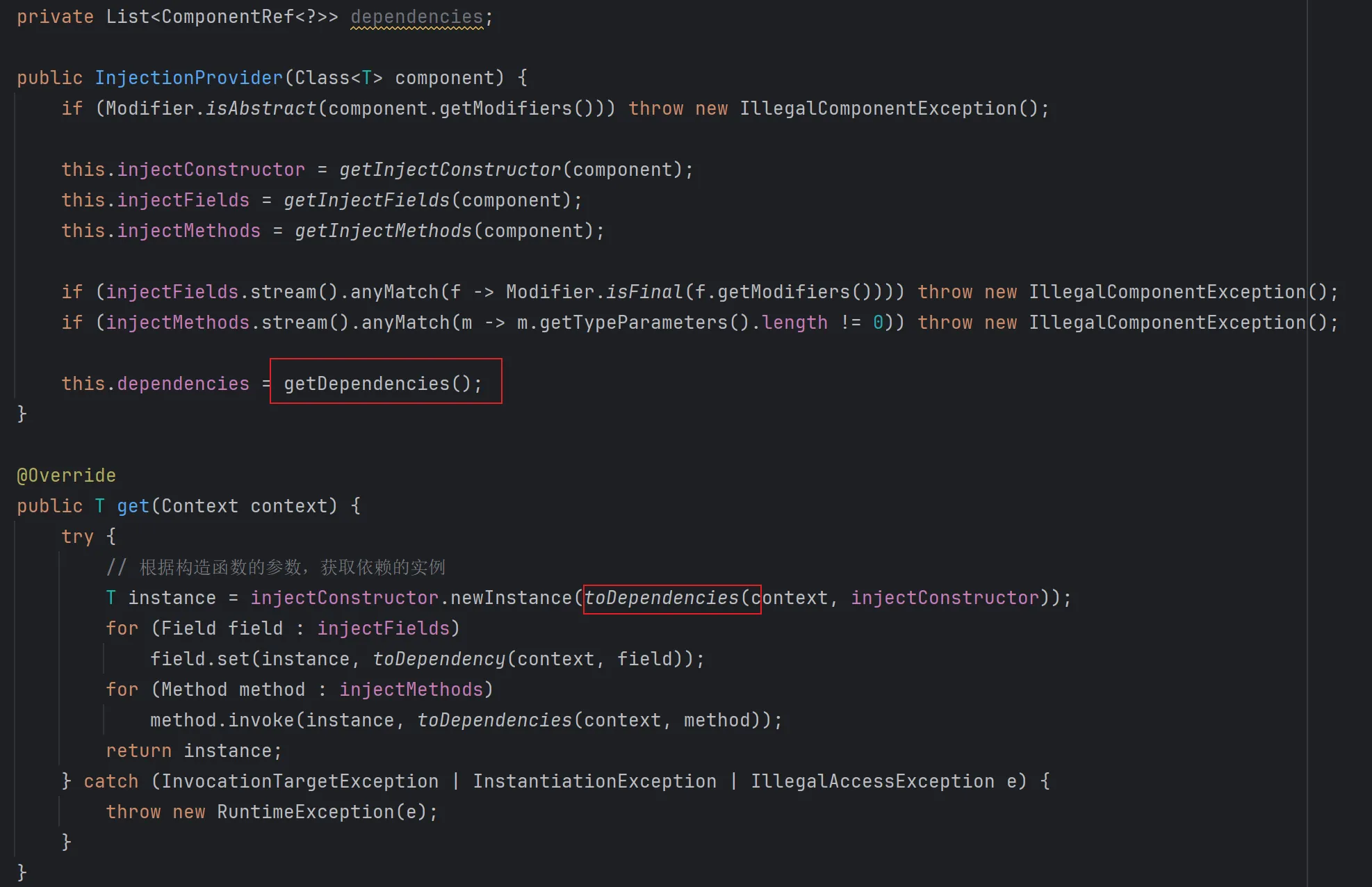
这是最难发现和消除的坏味道。这可能意味着我们对模型概念的封装不足。
模型封装
先创建一个封装类,将注入器和依赖组合在一起。
1   static record Injectable<Element extends AccessibleObject>(Element element, ComponentRef<?>[] required){
2
3   }
范型继承自 AccessibleObject,因为其子类正好包含当前需要的 Constructor、Field、Method,并使用 ComponentRef 数组表示依赖。
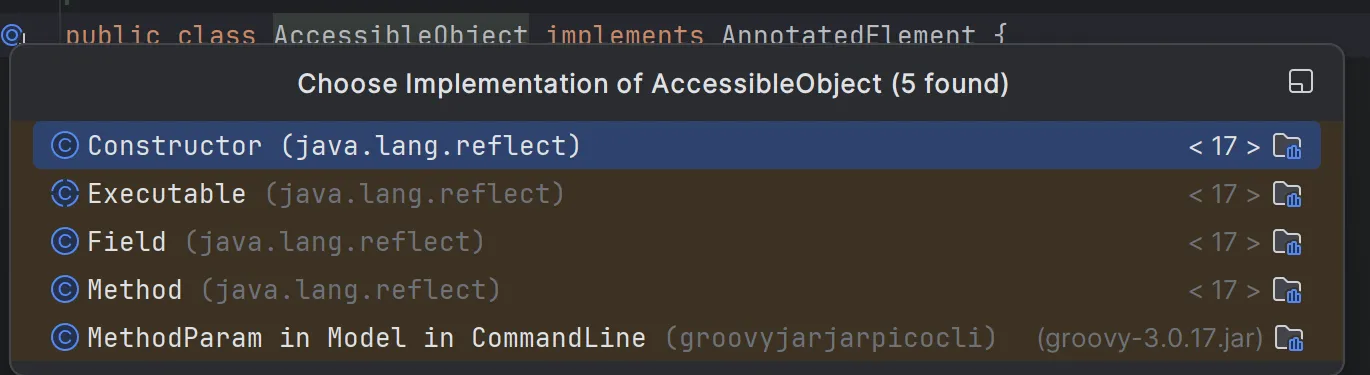
封装构造器和依赖
使用 injectableConstructor 来代替原有的 injectConstructor,同样是先新增功能再替换:
1   private Constructor<T> injectConstructor;
2   private Injectable<Constructor<T>> injectableConstructor;
new InjectionProvider 时,同时为 injectableConstructor 赋值,需要先获取 constructor 和 构造器依赖的 dependency,获取这两数据的代码,在现有的代码里面已经存在了,直接复用就可以。
1   Constructor<T> constructor = getInjectConstructor(component);
2   ComponentRef<?>[] constructorDependencies = Arrays.stream(constructor.getParameters()).map(InjectionProvider::toComponentRef)
3           .toArray(ComponentRef<?>[]::new);
4   this.injectableConstructor = new Injectable<>(constructor, constructorDependencies);
接着,需要找到 injectConstructor 在哪里使用,并使用 injectableConstructor 替换掉 injectConstructor。
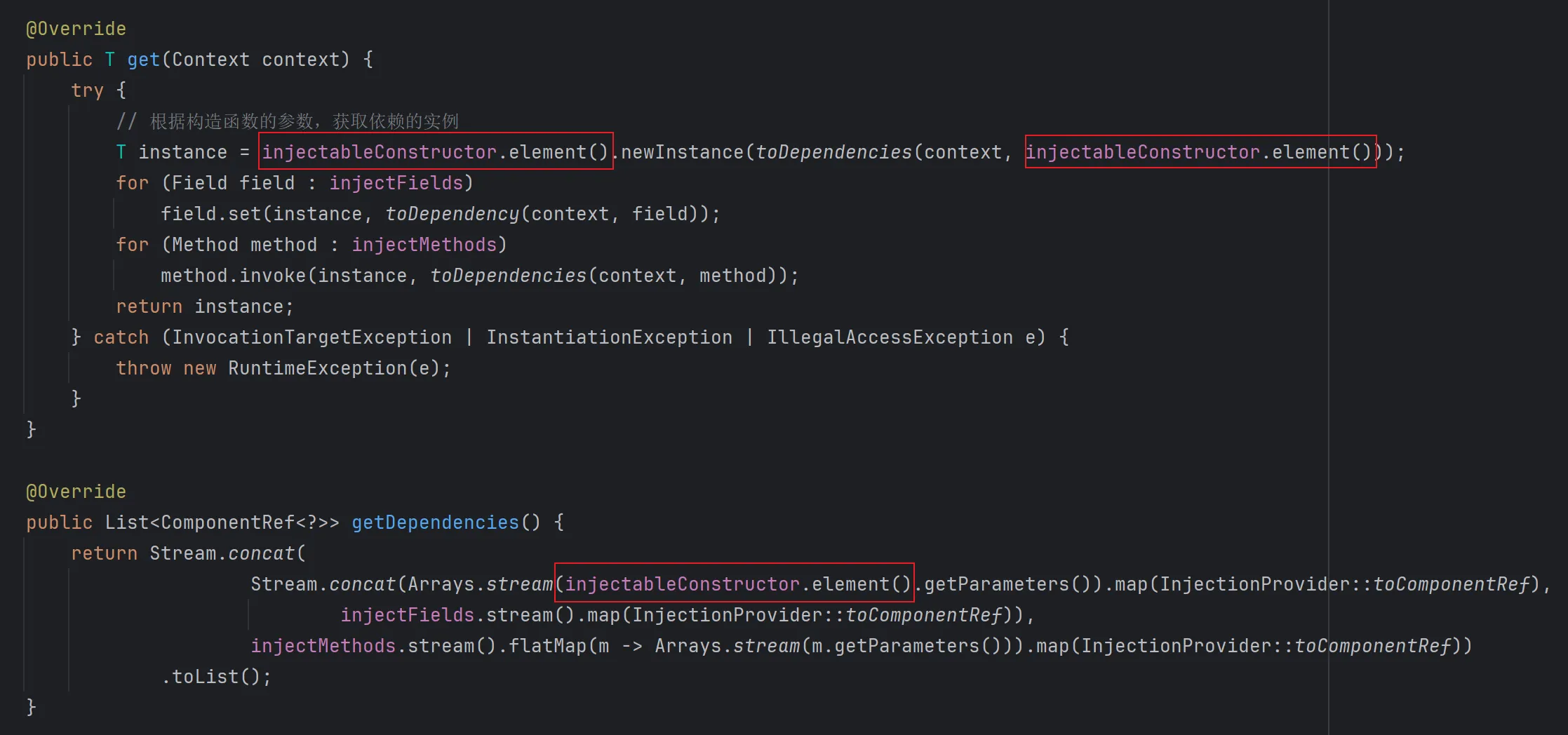
并且以上 getDependencies 方法中的部分还需要替换为如下,避免重复获取依赖,可以直接从 injectableConstructor 获取:

同样的,newInstance 也不需要重新获取依赖,可以直接从 injectable 中获取。
在 Injectable 中增加一个方法,直接从 context 容器中查找依赖,并返回为 newInstance 所需的数组。
1   static record Injectable<Element extends AccessibleObject>(Element element, ComponentRef<?>[] required){
2       Object[] toDependencies(Context context) {
3           return Arrays.stream(required).map(context::get).map(Optional::get).toArray();
4       }
5   }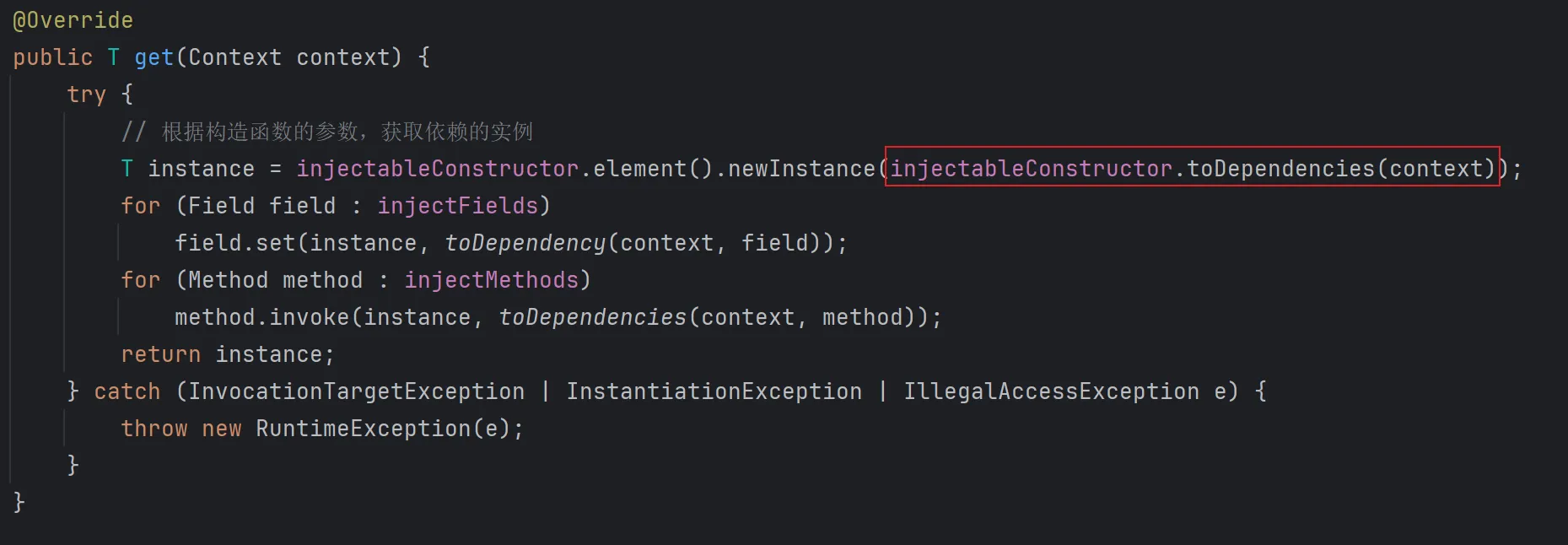
修改后,可以移除 injectConstructor。
再将 injectableConstructor 重名回 injectConstructor。
封装方法注入器和依赖
同样的,使用 injectableMethods 替换掉 injectMethods:
1   private List<Injectable<Method>> injectableMethods;
2   private List<Method> injectMethods;
因为构造器和普通方法都是属于方法,并且因为 Constructor 和 Method 都有一个名为 Executable 的父类,所以将构造每一个 Executable 的 Injectable 的代码提取为一个方法,用于同时创建 Constructor 和 Method 的 Injectable 封装类:
1   private static <Element extends Executable> Injectable<Element> getInjectable(Element method) {
2       ComponentRef<?>[] dependencies = Arrays.stream(method.getParameters()).map(InjectionProvider::toComponentRef)
3               .toArray(ComponentRef<?>[]::new);
4       return new Injectable<>(method, dependencies);
5   }
那么 injectableMethods 的赋值语句就如下所示:
1 this.injectableMethods = getInjectMethods(component).stream().map(InjectionProvider::getInjectable).toList();接着找到,injectMethods 在哪里被使用
之前的代码有一处有问题的地方,这里应该先使用 injectMethods 替换掉,不然就在 new InjectionProvider 时,重复调用了两次 getInjectMethods 方法

修为为:

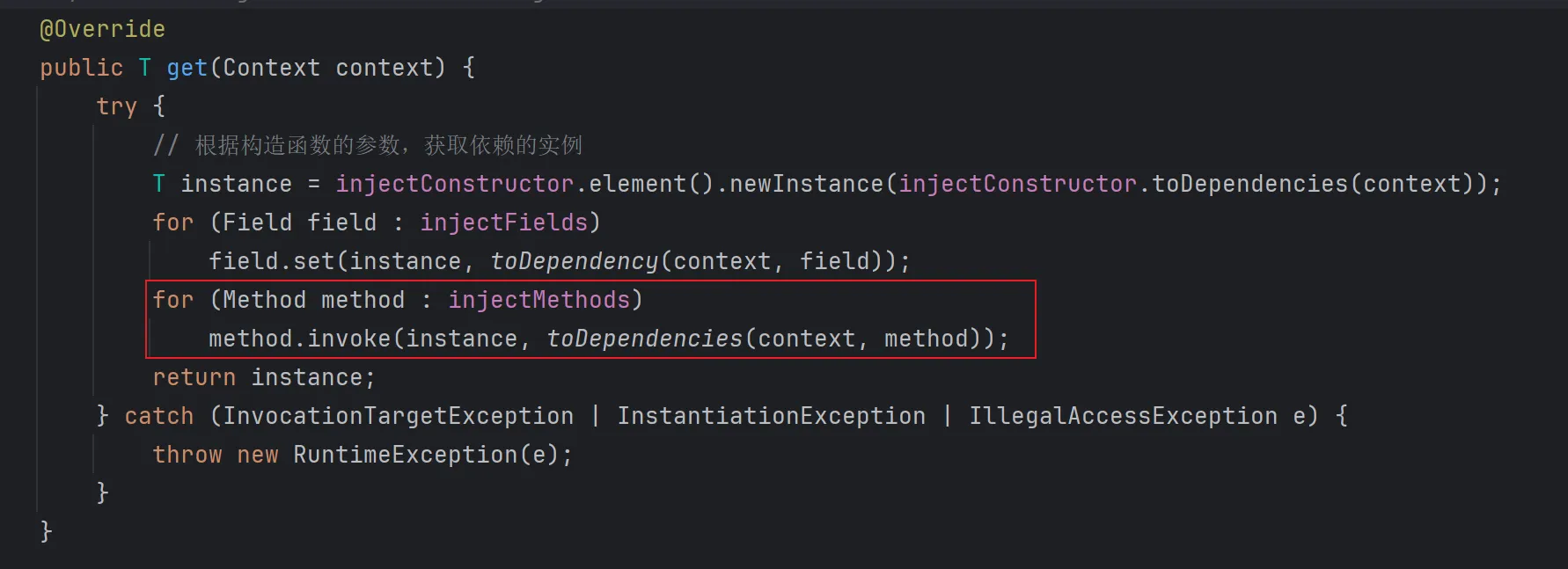
修改为:
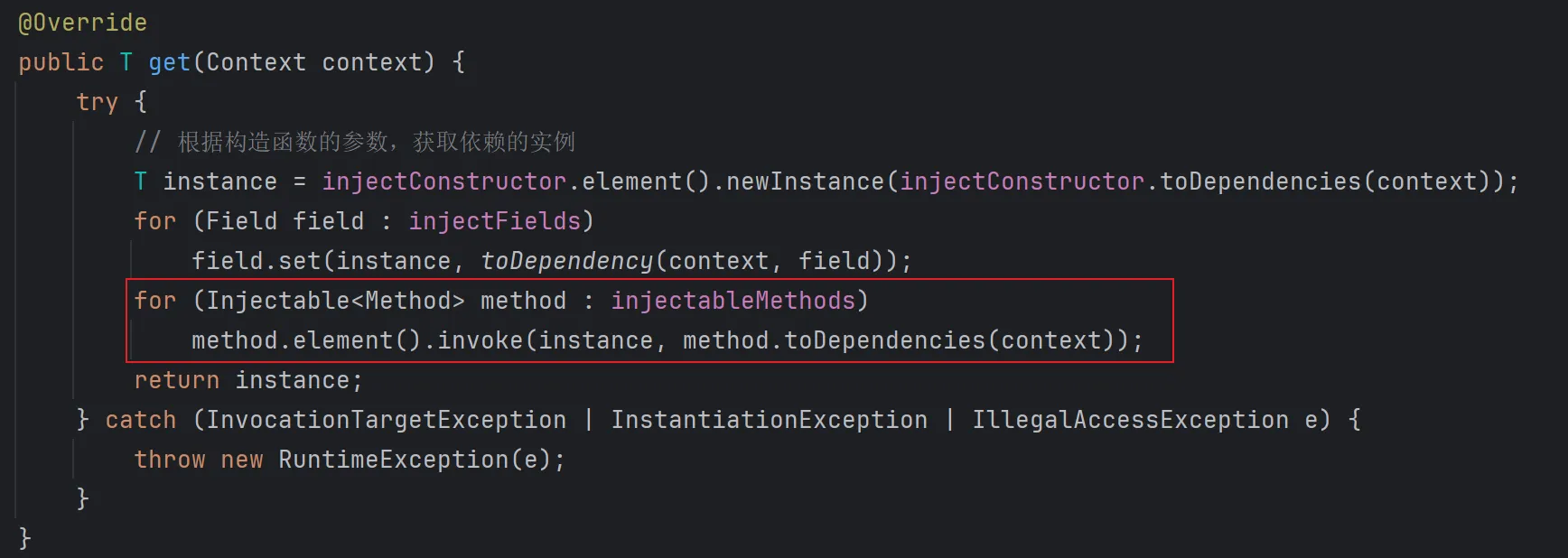

修改为:
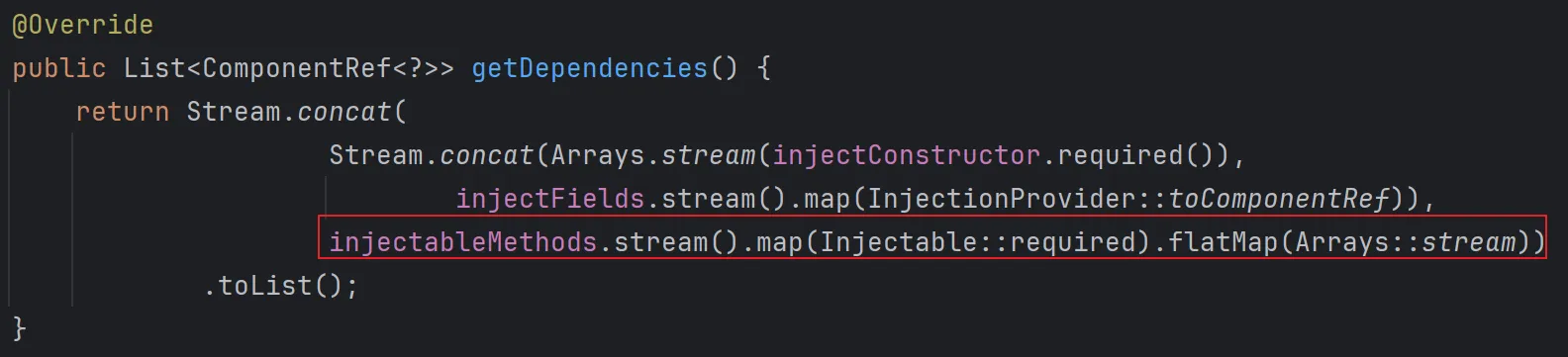
移除掉 injectMethods 字段
再将 injectableMethods 重命名回 injectMethods
简单重构
先将当前的 getInjectable 方法移动到 Injectable 中,并重命名为 of,这就是一个工厂方法:
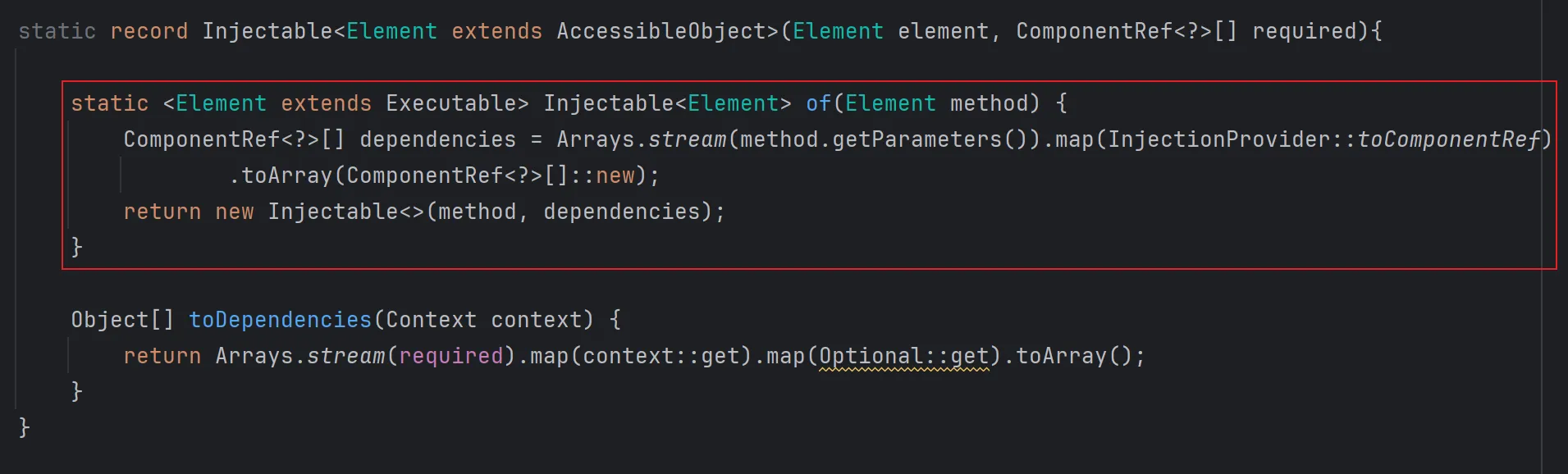
封装字段注入器和依赖
使用 injectableFields 替换掉 injectFields
1   private List<Injectable<Field>> injectableFields;
2
3   private List<Field> injectFields;
在 Injectable 中新建一个工厂方法:
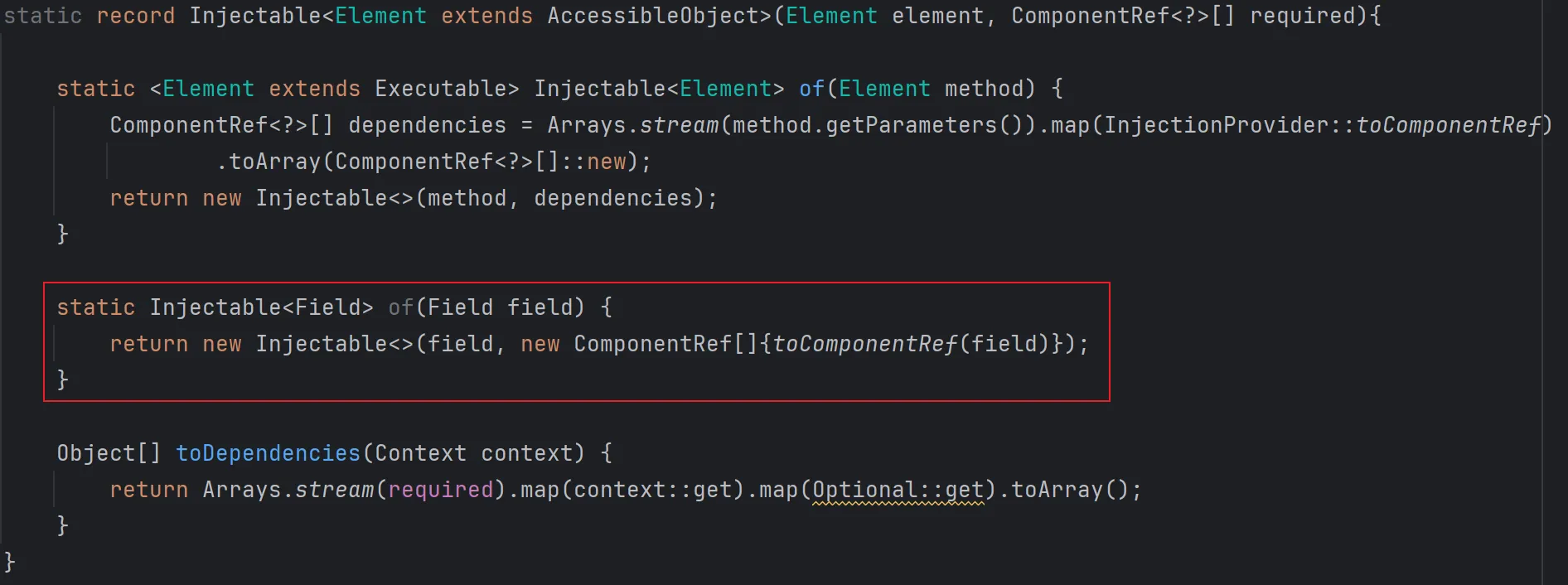
那么 injectableFields 的赋值语句为:
1 this.injectableFields = getInjectFields(component).stream().map(Injectable::of).toList();接着查找 injectFields 在哪里被使用,并修改为 injectableFields

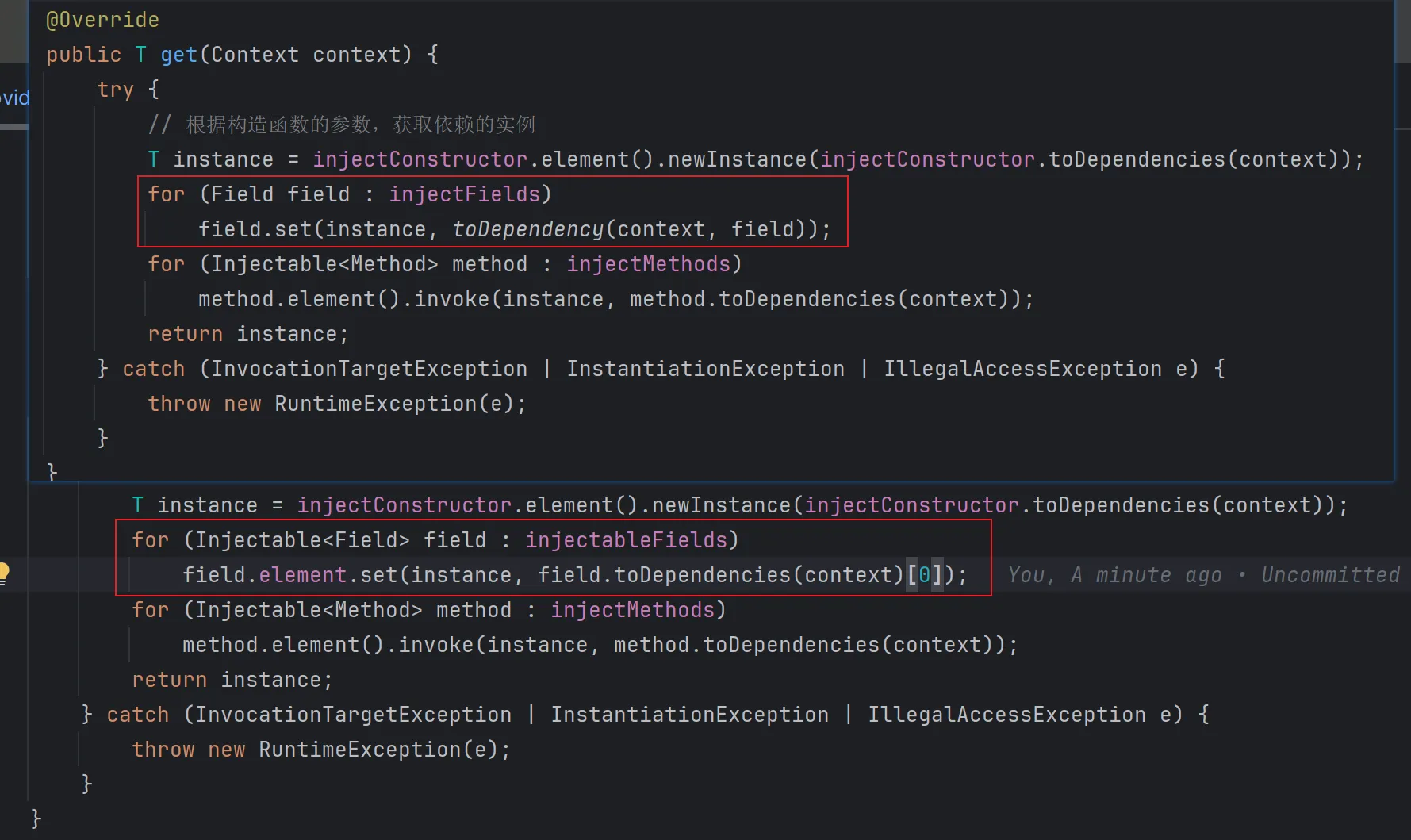
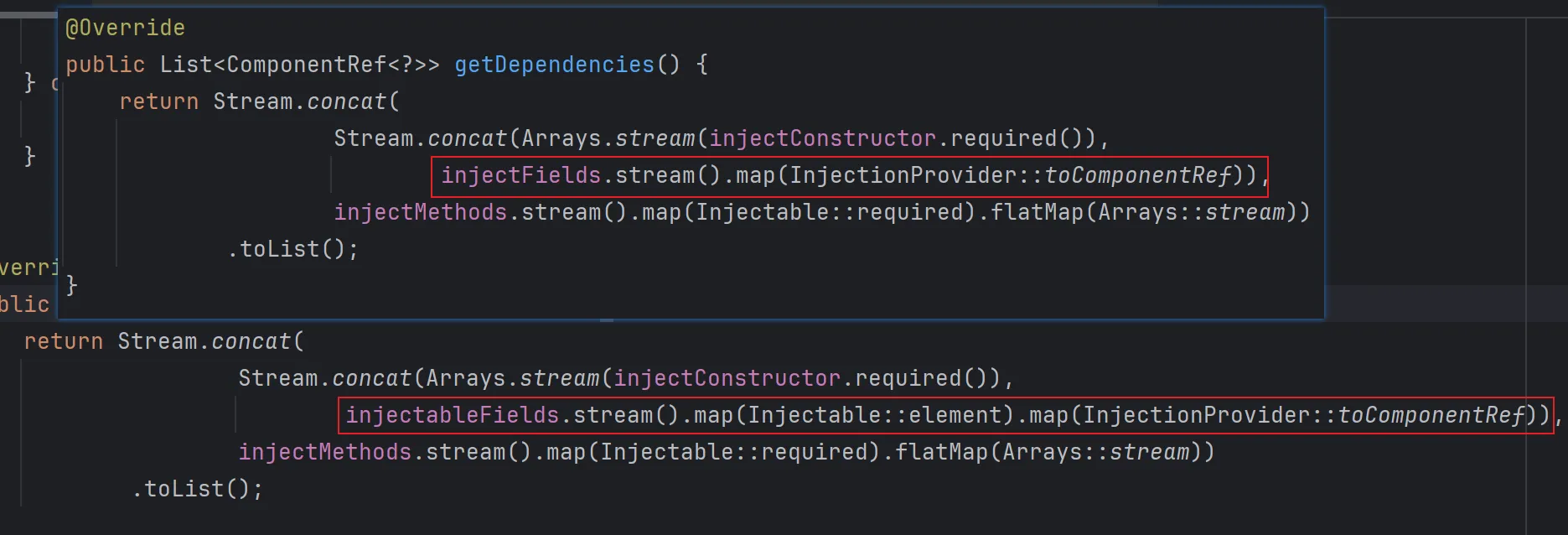
更好的实现是直接从 Injectable 中获取依赖,避免计算:
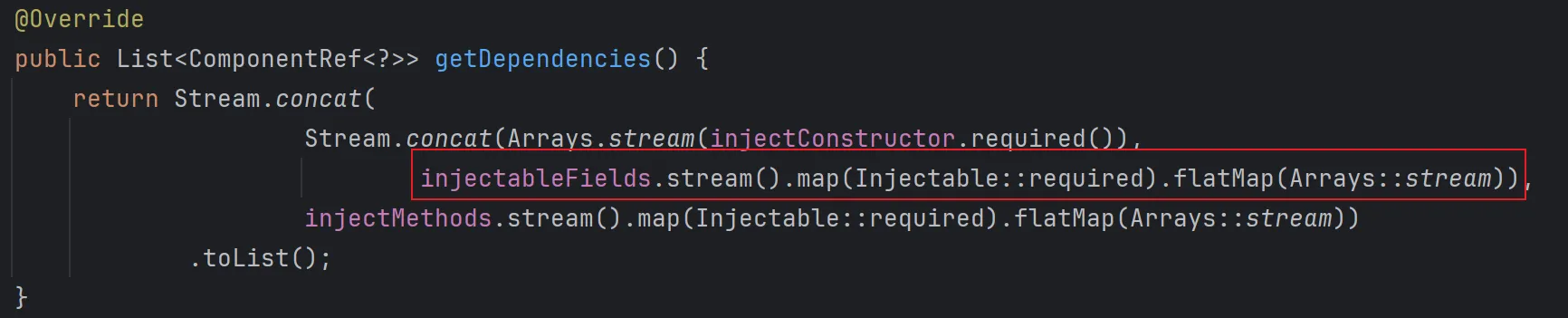
移除 injectFields 字段,
再将 injectableFields 重命名为 injectFields
至此,dependencies 字段已无用,也可以删除,并移除掉一些不再使用的方法。
那么,InjectionProvider 的字段和构造函数就变为:
1   private Injectable<Constructor<T>> injectConstructor;
2   private List<Injectable<Method>> injectMethods;
3   private List<Injectable<Field>> injectFields;
4
5   public InjectionProvider(Class<T> component) {
6       if (Modifier.isAbstract(component.getModifiers())) throw new IllegalComponentException();
7
8       Constructor<T> constructor = getInjectConstructor(component);
9       this.injectConstructor = Injectable.of(constructor);
10      this.injectMethods = getInjectMethods(component).stream().map(Injectable::of).toList();
11      this.injectFields = getInjectFields(component).stream().map(Injectable::of).toList();
12
13      if (injectFields.stream().map(Injectable::element).anyMatch(f -> Modifier.isFinal(f.getModifiers())))
14          throw new IllegalComponentException();
15      if (injectMethods.stream().map(Injectable::element).anyMatch(m -> m.getTypeParameters().length != 0))
16          throw new IllegalComponentException();
17
18  }
整理代码
观察发现,这几个方法只会在 Injectable 中被调用,可以将这几个方法移动到 Injectable 中
1   private static ComponentRef<?> toComponentRef(Field field) {
2       Annotation qualifier = getQualifier(field);
3       return ComponentRef.of(field.getGenericType(), qualifier);
4   }
5
6   private static ComponentRef<?> toComponentRef(Parameter parameter) {
7       Annotation qualifier = getQualifier(parameter);
8       return ComponentRef.of(parameter.getParameterizedType(), qualifier);
9   }
10
11  private static Annotation getQualifier(AnnotatedElement parameter) {
12      List<Annotation> qualifiers = Arrays.stream(parameter.getAnnotations())
13              .filter(a -> a.annotationType().isAnnotationPresent(Qualifier.class)).toList();
14      if (qualifiers.size() > 1) throw new IllegalComponentException();
15      return qualifiers.stream().findFirst().orElse(null);
16  }
可以使用 Move Member 的重构方式移动:
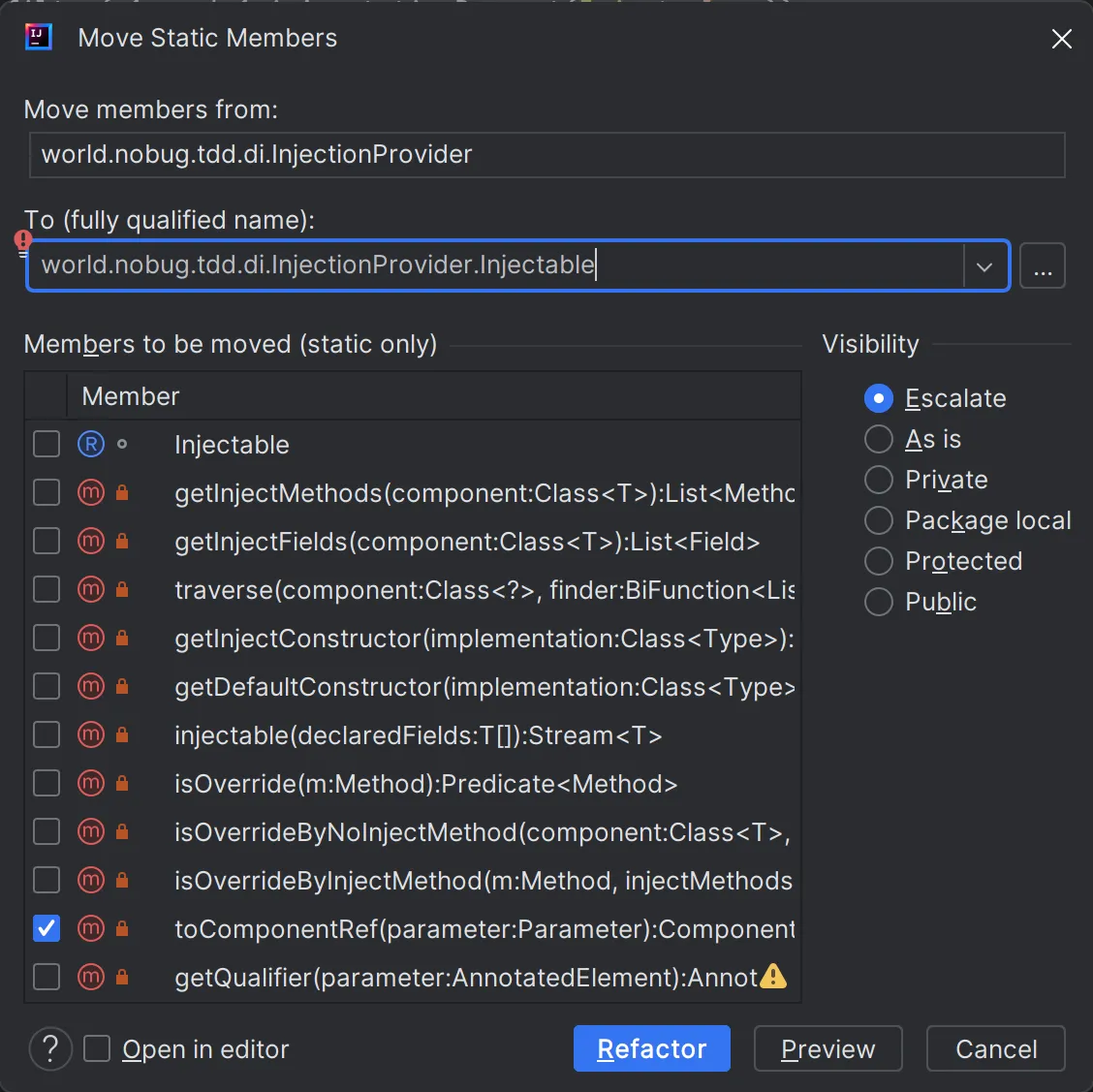
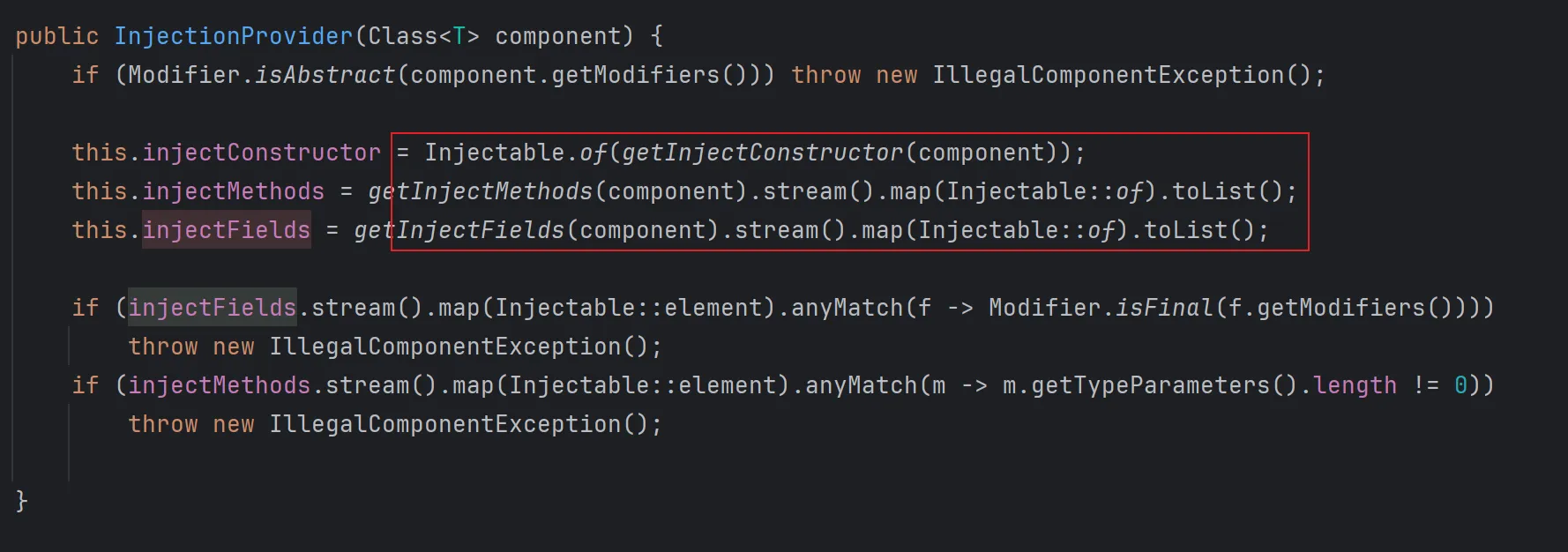
将这些表达式都提取为方法:

将getDependencies 方法:
1   @Override
2   public List<ComponentRef<?>> getDependencies() {
3       return Stream.concat(
4                       Stream.concat(Arrays.stream(injectConstructor.required()),
5                               injectFields.stream().map(Injectable::required).flatMap(Arrays::stream)),
6                       injectMethods.stream().map(Injectable::required).flatMap(Arrays::stream))
7               .toList();
8   }
简化为,先拼接为 Injectable 的 Stream,再 Map
1   @Override
2   public List<ComponentRef<?>> getDependencies() {
3       return Stream.concat(Stream.concat(Stream.of(injectConstructor), injectFields.stream()), injectMethods.stream())
4               .flatMap(i -> Arrays.stream(i.required)).toList();
5   }
测试文档化重组
Provider 和 Qualifier 的测试
在 ContextText.TypeBinding.WithQualifier 中增加 Provider 和 Qualifier 相关联的两个测试,用于检查
- 获取被 Qualifier 的组件的 Provider
- 获取无对应 Qualifier 标记的组件的Provider是,Provider 应为空
1   @Test
2   public void should_retrieve_bind_type_as_provider() {
3       TestComponent component = new TestComponent() {
4       };
5       config.bind(TestComponent.class, component, new NamedLiteral("ChosenOne"), new AnotherOneLiteral());
6       Context context = config.getContext();
7       Optional<Provider<TestComponent>> provider =
8               context.get(new ComponentRef<Provider<TestComponent>>(new AnotherOneLiteral()) {});
9
10      assertTrue(provider.isPresent());
11  }
12
13  @Test
14  public void should_retrieve_empty_if_no_matched_qualifier() {
15      TestComponent component = new TestComponent() {
16      };
17      config.bind(TestComponent.class, component);
18      Context context = config.getContext();
19      Optional<Provider<TestComponent>> provider =
20              context.get(new ComponentRef<Provider<TestComponent>>(new NamedLiteral("ChosenOne")) {});
21
22      assertTrue(provider.isEmpty());
23  }
需要在 ComponentRef 中增加构造方法:
1   public ComponentRef(Annotation qualifier) {
2       Type type = ((ParameterizedType) (getClass().getGenericSuperclass())).getActualTypeArguments()[0];
3       init(type, qualifier);
4   }
Qualifier 依赖检查参数化
将当前 ContextText.DependencyCheck.WithQualifier 中两个测试修改为参数化的测试:
未找到被 Qualifier 标记的依赖时,抛出依赖不存在的异常的的参数化测试:
1   // dependency missing if qualifier not match
2   @ParameterizedTest
3   @MethodSource
4   public void should_throw_exception_if_dependency_with_qualifier_not_found(Class<? extends TestComponent> componentType) {
5
6       config.bind(Dependency.class, new Dependency() {
7       });
8       config.bind(TestComponent.class, componentType, new NamedLiteral("ChosenOne"));
9
10      DependencyNotFoundException exception =
11              assertThrows(DependencyNotFoundException.class, () -> config.getContext());
12
13      assertEquals(new Component(TestComponent.class, new NamedLiteral("ChosenOne")), exception.getComponent());
14      assertEquals(new Component(Dependency.class, new AnotherOneLiteral()), exception.getDependency());
15
16  }
17  public static Stream<Arguments> should_throw_exception_if_dependency_with_qualifier_not_found() {
18      return Stream.of(
19              Arguments.of(Named.of("Constructor Injection with Qualifier", DependencyCheck.WithQualifier.InjectConstructor.class)),
20              Arguments.of(Named.of("Field Injection with Qualifier", DependencyCheck.WithQualifier.InjectField.class)),
21              Arguments.of(Named.of("Method Injection with Qualifier", DependencyCheck.WithQualifier.InjectMethod.class)),
22              Arguments.of(Named.of("Provider Constructor Injection with Qualifier", DependencyCheck.WithQualifier.InjectConstructorProvider.class)),
23              Arguments.of(Named.of("Provider Field Injection with Qualifier", DependencyCheck.WithQualifier.InjectFieldProvider.class)),
24              Arguments.of(Named.of("Provider Method Injection with Qualifier", DependencyCheck.WithQualifier.InjectMethodProvider.class))
25      );
26  }
27
28  static class InjectConstructor implements TestComponent {
29      @Inject
30      public InjectConstructor(@AnotherOne Dependency dependency) {
31      }
32  }
33
34  static class InjectField implements TestComponent {
35      @Inject
36      @AnotherOne Dependency dependency;
37  }
38  static class InjectMethod implements TestComponent {
39      Dependency dependency;
40
41      @Inject
42      public void install(@AnotherOne Dependency dependency) {
43          this.dependency = dependency;
44      }
45  }
46
47  static class InjectConstructorProvider implements TestComponent {
48      @Inject
49      public InjectConstructorProvider(@AnotherOne Provider<Dependency> dependency) {
50      }
51  }
52
53  static class InjectFieldProvider implements TestComponent {
54      @Inject
55      @AnotherOne
56      Provider<Dependency> dependency;
57  }
58
59  static class InjectMethodProvider implements TestComponent {
60      Dependency dependency;
61
62      @Inject
63      public void install(@AnotherOne Provider<Dependency> dependency) {
64          this.dependency = dependency.get();
65      }
66  }
包含 Qualifier 标注的依赖的循环依赖检查的参数化测试:
1   // check cyclic dependencies with qualifier
2   // A -> @AnotherOne A -> @Named A
3   @ParameterizedTest(name = "{1} -> @AnotherOne({0}) -> @Named(\"ChosenOne\") not cyclic dependencies")
4   @MethodSource
5   public void should_not_throw_exception_if_component_with_same_type_tagged_with_different_qualifier(Class<? extends Dependency> anotherDependencyType,
6                                                                                                  Class<? extends Dependency> notCyclicDependencyType) {
7       Dependency instance = new Dependency() {
8       };
9       config.bind(Dependency.class, instance, new NamedLiteral("ChosenOne"));
10      config.bind(Dependency.class, anotherDependencyType, new AnotherOneLiteral());
11      config.bind(Dependency.class, notCyclicDependencyType);
12
13      assertDoesNotThrow(() -> config.getContext());
14  }
15
16  public static Stream<Arguments> should_not_throw_exception_if_component_with_same_type_tagged_with_different_qualifier() {
17      List<Arguments> arguments = new ArrayList<>();
18      for (Named anotherDependency : List.of(Named.of("Constructor Injection", AnotherOneDependencyConstructor.class),
19              Named.of("Field Injection", DependencyCheck.WithQualifier.AnotherOneDependencyField.class),
20              Named.of("Method Injection", DependencyCheck.WithQualifier.AnotherOneDependencyMethod.class))) {
21          for (Named notCyclicDependency : List.of(Named.of("Constructor Injection", NotCyclicDependencyConstructor.class),
22                  Named.of("Field Injection", DependencyCheck.WithQualifier.NotCyclicDependencyField.class),
23                  Named.of("Method Injection", DependencyCheck.WithQualifier.NotCyclicDependencyMethod.class))) {
24              arguments.add(Arguments.of(anotherDependency, notCyclicDependency));
25          }
26      }
27      return arguments.stream();
28  }
29
30  static class AnotherOneDependencyConstructor implements Dependency {
31      @Inject
32      public AnotherOneDependencyConstructor(@jakarta.inject.Named("ChosenOne") Dependency dependency) {
33      }
34  }
35  static class AnotherOneDependencyField implements Dependency {
36      @Inject
37      @jakarta.inject.Named("ChosenOne") Dependency dependency;
38
39  }
40  static class AnotherOneDependencyMethod implements Dependency {
41      @Inject
42      public void install(@jakarta.inject.Named("ChosenOne") Dependency dependency) {
43      }
44  }
45
46  static class NotCyclicDependencyConstructor implements Dependency {
47      @Inject
48      public NotCyclicDependencyConstructor(@AnotherOne Dependency dependency) {
49      }
50  }
51  static class NotCyclicDependencyField implements Dependency {
52      @Inject
53      @AnotherOne Dependency dependency;
54  }
55  static class NotCyclicDependencyMethod implements Dependency {
56      @Inject
57      public void install(@AnotherOne Dependency dependency) {
58      }
59  }